
Whole-Shrimp Freezer Demand Crimps Shrimp Tails(Sep 4)
Argentine Red Shrimp Factories Struggle: Cannot Produce Good Shrimp Tails as Freezer Ships Absorb Whole Shrimp
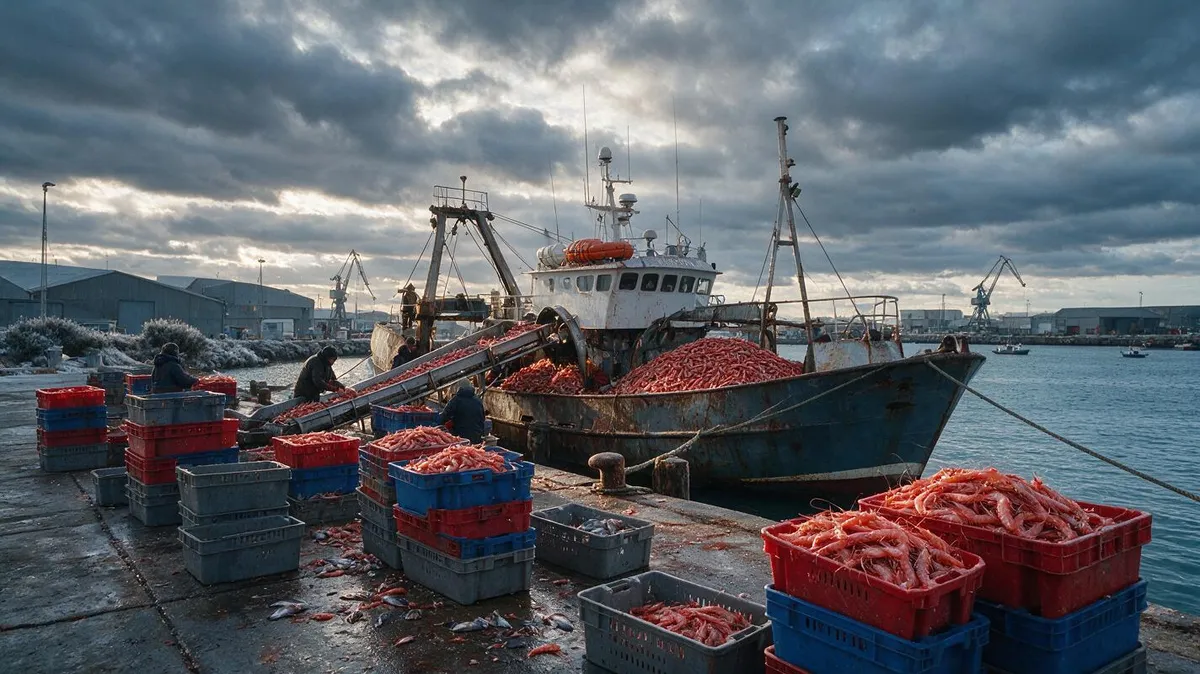
Argentina's national red shrimp fishing season is nearing its end, and while the total catch figures look good, the reality onshore at the processing plants tells a different story. Fernando Damboriana, plant manager at the Veraz Group's Rawson facility, told REVISTA PUERTO: "If you only look at the industry numbers, you could say it's been a good season at the fishing level; but from our factory's perspective, I don't think this season has been particularly good." He explained that although the official closing order has not yet been issued, very few vessels are still operating, and the season can be considered technically over. Severe winter weather, resource depletion in some fishing zones, and reduced raw material landings combined to leave the processing segment with a "somewhat bitter" experience. Red shrimp is one of Argentina's most important seafood exports, and the season's catch is distributed by vessel type and fishing area to different processing streams. This season's shortfall directly affected the pace of downstream frozen product supply.
A clear gap emerged between fishing and processing. Damboriana noted that the freezer fleet and fresh-catch fleet achieved decent overall performance, but this result was not fully reflected in the raw materials received by the factories: "In terms of what the factories actually received, due to weather and vessel port-call patterns, this was not a very intensive season." The insufficient raw material intensity directly limited processing forms -- the Rawson plant primarily produced shrimp tails and peeled/deveined products this season, as raw material quality did not meet the standards required to direct a larger proportion toward whole shrimp. The plant received its first batch of raw materials around June 10, and for the first month, it was difficult to produce shrimp tails that met quality standards: "For the entire first month, it was a struggle to produce even a single good shrimp tail." The company had to redirect some capacity to peeled/deveined products, only beginning to catch up on backlogged shrimp tail orders by mid-July.
The gap compared to previous years is equally pronounced. Damboriana pointed out that in previous years, the September fishing season typically saw shrimp schools closer to shore or further north, yielding higher recovery rates. Based on this season's trajectory, a similar scenario is unlikely to recur next month. On the raw material sourcing side, Veraz used both its own fleet and purchased catches from fresh-catch vessels in Mar del Plata this season. Its own vessels include Victoria II, Americano, and Argentino, while purchased catches came from Don Santiago, Sfida, and Centauro 2000. The company's own vessel Leonilda later joined from more northern waters. This supply arrangement aimed to ensure continuous operation of the group's plants and keep costs down. Port-of-discharge assignments were directly tied to costs -- Leonilda unloaded at Rawson, Victoria II at Camarones, and Argentino briefly at Caleta Paula. Cost differences between ports were significant, with "Rawson being one of the most expensive among them."
Regarding the 72-hour rule, Argentina allows fresh-catch vessels to extend their operating time within a 72-hour framework, primarily to reduce round-trip voyages and control transportation costs, while raw material quality remains the bottom line. Damboriana stated that this adjustment did not affect the product quality his company received: "For quality reasons, we would not allow extended operations to stretch beyond a reasonable 72 hours anyway." On the market side, the company had originally expected more raw materials to enter cold storage, but actual arrivals fell short of expectations, forcing adjustments to procurement and production plans. The market absorption structure is clear: the main demand is for shrimp tails and peeled/deveined products, while most of the whole shrimp demand is absorbed by the freezer fleet, leaving shore-based factories with a limited share in this category.
The next signal for the international market will come from Vigo. The Conxemar trade fair is a key node for the Argentine red shrimp industry to gauge commercial expectations, traditionally held in autumn, serving as the primary window for new-season pricing and order negotiations. Damboriana anticipated: "At Vigo, as in previous years, we will at least establish some of our commercial expectations." With the national season winding down, Veraz has already begun arranging company holidays for next month, after which attention will shift to the provincial fishing season in the waters of Chubut Province. The provincial season fills the gap left by the national season, and the company hopes it will bring larger catch volumes and better raw material quality.
Regarding the start date of the provincial season, industry sources cite late October to early November, but Damboriana was reluctant to treat this as confirmed information: "I think these are more expressions of wishful thinking than hard data." He acknowledged that an early November start would be good for the industry: "With the national season ending so early, if the provincial season can start in early November, that would be the best possible outcome."