
Egg Monthly: Loose Supply and Demand, Egg Prices Grinding at the Bottom(Oct 30)
Egg Monthly: Loose Supply and Demand, Egg Prices Grinding at the Bottom

1. October Egg Market Overview
In October, egg prices overall maintained a weak trend. On the supply side, as autumn arrived, laying rates recovered seasonally, and newly opened laying hens successively entered peak production. Egg output showed no significant contraction, and overall market supply remained loose. Old hen culling showed a pattern of first declining then increasing: in the first third of the month, farming operations held back culling with a wait-and-see approach; in the middle and late periods, as egg prices fell to low levels, culling intentions increased and culling volumes recovered, providing some support for egg prices to bottom out and rebound. On the demand side, post-holiday terminal consumption fully retreated, food factory procurement contracted, and traders primarily purchased on-demand with light inventory turnover. Proactive stockpiling willingness was low, with only low prices stimulating phased inventory rotation restocking, and consumption area sales continued under pressure. Overall, supply remained loose while demand lacked momentum, and egg prices maintained a weak bottom-grinding pattern.
2. Monthly Egg Market Fundamental Analysis
In October, old hen culling showed a rhythm of first declining then increasing. In the first third of the month, egg prices declined, but farming operations held strong wait-and-see sentiment on culling, and culling volumes decreased. Old hen egg supply was abundant with suboptimal quality, dragging down egg price trends. In the middle and late periods, as egg prices fell to low levels and profits narrowed, farmers' culling willingness increased, and culling volumes recovered month-on-month. In the last two weeks, old hen culling increased in a phased manner, and local supply pressure eased somewhat, providing support for egg prices to bottom out and rebound. Overall, October layer flock inventory may have declined slightly, but as temperatures fell and laying rates recovered, combined with newly opened laying hens supplementing supply, egg output showed no significant contraction, and overall market supply remained loose.
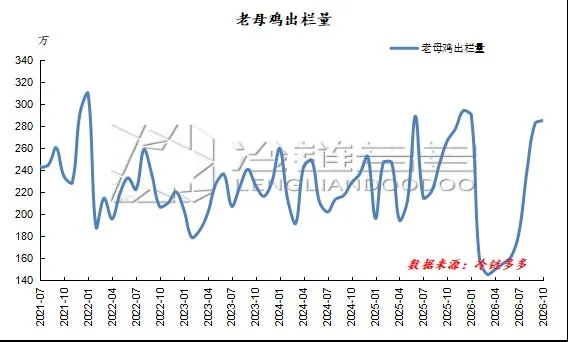
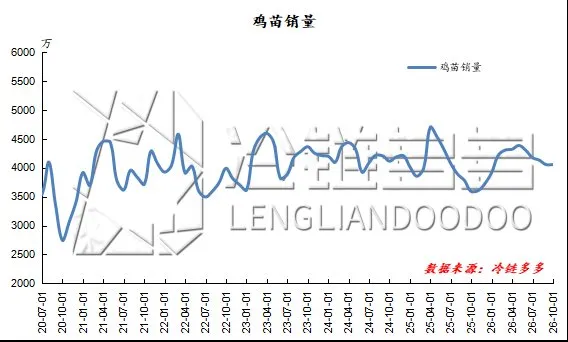
The post-holiday off-season effect continued, with terminal demand lacking momentum. After the double holidays, food factory raw material procurement contracted noticeably. Downstream traders and supermarkets primarily purchased on-demand with light inventory turnover, and proactive stockpiling willingness was low. School and enterprise cafeteria demand returned to normal levels, lacking centralized procurement support. Meanwhile, pork and fresh vegetable prices were relatively low, and the protein substitution effect diverted some egg consumption, further suppressing terminal shipments.
3. Monthly Egg Market Spot Prices
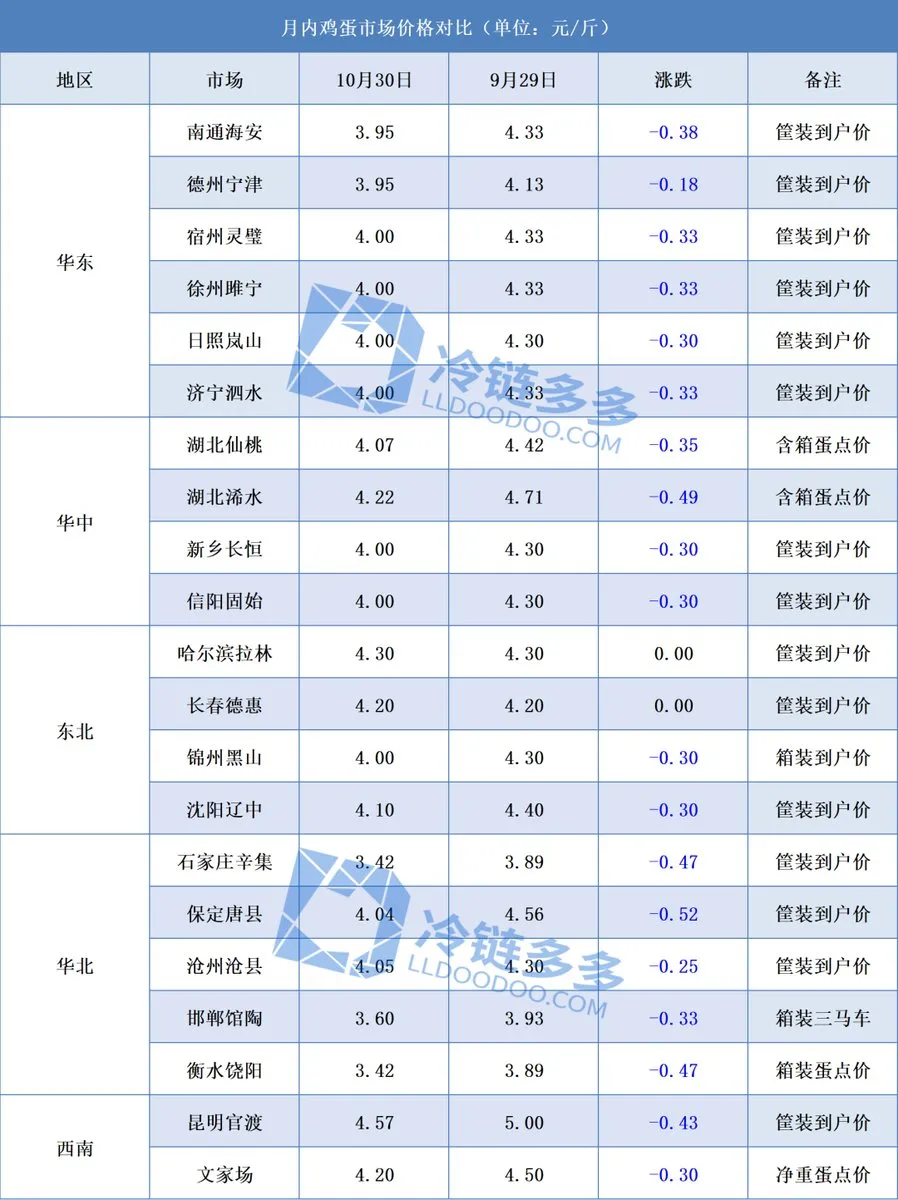
4. November Market Outlook
Supply Side
In November, newly opened laying hens will continue to enter peak production, continuously supplementing market supply, and supply-side increments are clear. Although old hen culling volumes have increased compared to earlier periods, most farmers still hold a wait-and-see mentality on selling, and delayed culling is widespread. The industry's deep capacity reduction pace remains overall slow. Overall, with new capacity release and delayed-cull old hens coexisting, the supply-side contraction amplitude is limited, overall cargo supply remains sufficient, and egg price increases still face supply pressure constraints.
Demand Side
The demand side is in the traditional consumption off-season, with the market lacking holiday catalyst support. Terminal shipments are primarily daily essential demand, making it difficult to form centralized procurement momentum. Downstream traders generally operate with a "buy low, sell high" mentality, purchasing at low prices when egg prices fall to low levels and selling opportunistically when prices rebound. This operational rhythm is fast in and fast out, with weak stockpiling willingness. Although this trading pattern can bring short-term shipment improvements at phased low price levels, the restocking intensity is limited and duration is short, unable to form sustained demand pull. The support for egg prices is more of a bottom floor rather than a trend-driven push upward.
Comprehensive Outlook
Overall, the supply-demand stalemate pattern continues. On the supply side, farming profits are acceptable, proactive capacity reduction willingness is not strong, and layer flock inventory may show a slight increase, keeping supply loose. The demand side is in the off-season, with only small-scale food enterprise restocking and lacking centralized pull. However, low temperatures extend egg storage time, and channel inventory rotation operations provide some bottom support. November egg prices are expected to trade in a narrow range with insufficient momentum for either trend-driven increases or decreases. The expected adjustment range is approximately 0.5-0.9 yuan/jin, with the main production area average projected at 3.60-4.00 yuan/jin.
-
Egg Monthly: Loose Supply and Demand, Egg Prices Grinding at the Bottom(Oct 30)5482
-
Kazakhstan Proposes Reducing Beef Supply Chain Intermediaries to Narrow Price Gap(Oct 30)9607
-
Botswana Citrus Granted Market Access to China with Zero Tariff(Oct 30)6616
-
Egg Weekly: Prices Bottom Out and Rebound, Sustainability Remains Questionable(Oct 29)8658
-
China Becomes Norway's Second-Largest Seafood Market as Salmon Exports Reach 98,000 Tons in First 9 Months, Up 42%(Oct 29)6068