
Ecuador Shrimp Rebounds, China Seeks Price‑Rise Signal(August 25)
Ecuadorian Shrimp Quotes to China Stop Falling and Rebound; Chinese Market Awaiting a Price-Rise Signal
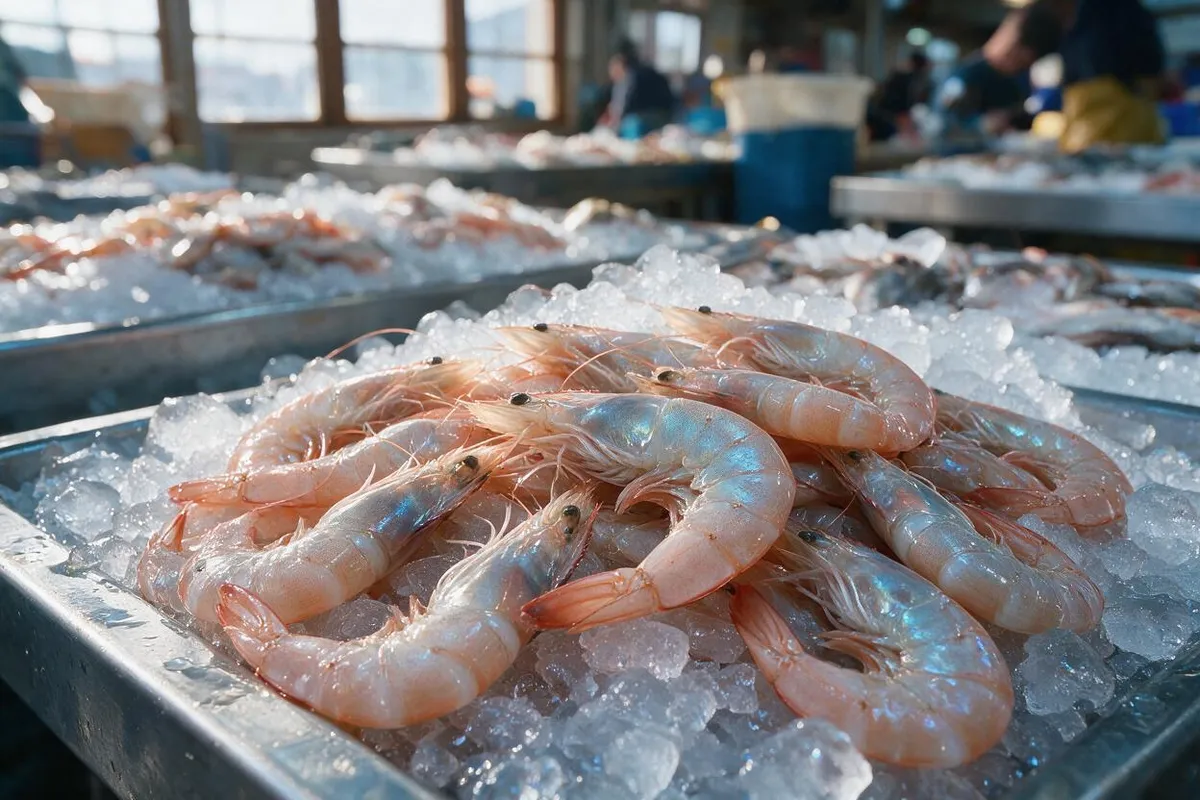
In Week 35 of 2026 (August 24-30), prices of Ecuadorian farmed shrimp in China's wholesale market held steady, with spot prices believed to have bottomed out. On the eve of Ecuadorian President Noboa's visit to China, the General Administration of Customs of China (GACC) restored the export qualifications of eight Ecuadorian shrimp processing enterprises for shipment to China, reducing the number of restricted companies from 14 to 6. On June 30, the GACC suspended the export qualifications of multiple Ecuadorian shrimp companies due to excessive sodium metabisulfite levels, which once tightened market supply expectations; now, fewer than half of the suspended factories remain. According to local media reports, Noboa's visit to China is aimed at securing the lifting of the import suspensions on all 14 Ecuadorian shrimp processing enterprises.
This development provides direct support to the wholesale market. In terms of wholesale pricing, retail-packed whole shell-on shrimp (single frozen and semi-individually quick frozen in brine) remained flat week-on-week, and spot prices for bulk brine single-frozen products likewise saw no change. The market is waiting for a clearer upward signal: a further increase in Ecuadorian cost-and-freight (CFR) quotes to China. Ecuadorian farmed shrimp is highly dependent on the Chinese market, with exports to China consistently ranking among the top by share of total export volume. Every step of the lifting process directly transmits to the pricing sentiment in the domestic wholesale segment.
"The entire wholesale market just needs one signal to ignite: Ecuadorian quotes need to go up," said one importer. He explained that current inventory levels are reasonable, some distributors have already cleared their stock, and newly arrived goods were procured at lower costs. Once Ecuadorian prices rise, the boost to the market would be very pronounced. He also mentioned that the Shanghai Seafood Expo would be an opportunity, and everyone is waiting for that moment.
The World Seafood Shanghai Expo 2026 will be held from August 26 to 28, and Ecuadorian exporters are expected to attend, using the event to gauge China's purchasing demand for the coming months.
In fact, CFR quotes have already shown early signs of recovery. In Week 34, Ecuadorian farmed shrimp quotes to China ended a downtrend that had persisted for several consecutive months: for retail-packed whole shell-on shrimp in the 30-40 semi-individually quick frozen specification, the price rose by USD 0.05 per kilogram, while the 20-30 large specification remained flat. For brine single-frozen products, retail-packed and bulk quotes for specifications of 40-50 and below rose by USD 0.05 to USD 0.10 per kilogram.
On the Argentine red shrimp side, wholesale prices were similarly stable. The retail price for 2 kg-packed L2 specification remained at around CNY 70 per kilogram (approximately USD 9.8) per kilogram, slightly higher than the L1 specification - a price level that has held for several months. Meanwhile, the Argentine red shrimp fishing fleet is intensifying its search for new fishing grounds. The 2026 distant-water fishing season has entered a more challenging phase; after strong early-season catches, shrimp distribution has become increasingly scattered. Data from the Argentine Secretariat of Agriculture, Livestock and Fisheries shows that cumulative catches this season have reached 104,230 tonnes, with 45,557 tonnes landed in July alone, and nearly 12,000 tonnes reported in the first 11 days of August.
Since late July, catch rates have weakened noticeably, with shrimp schools more dispersed, making it increasingly difficult for vessels to locate aggregations that can sustain the high catch rates seen earlier. A previous wave of exceptionally strong catches had the fleet operating at peak capacity; now, with shrimp distribution broken up, individual vessel catches can no longer sustain the fleet's previous pace of operations. Over the weekend, multiple vessels returned to port to switch fishing methods and target species, reflecting the current uneven distribution of shrimp across the fishing grounds.