
Chilled / Frozen / Hot Fresh Beef: Differences(Sep 10)
Chilled, Frozen, and Hot Fresh Beef: What Are the Differences and How to Choose?
Foodmate News
Background
In recent years, beef consumption has continued to grow. Chilled, frozen, and hot fresh beef are widely available in the market, but what exactly are the differences between these categories, and how should consumers make their choices?
Differences Among Chilled, Frozen, and Hot Fresh Beef
Chilled Fresh Beef
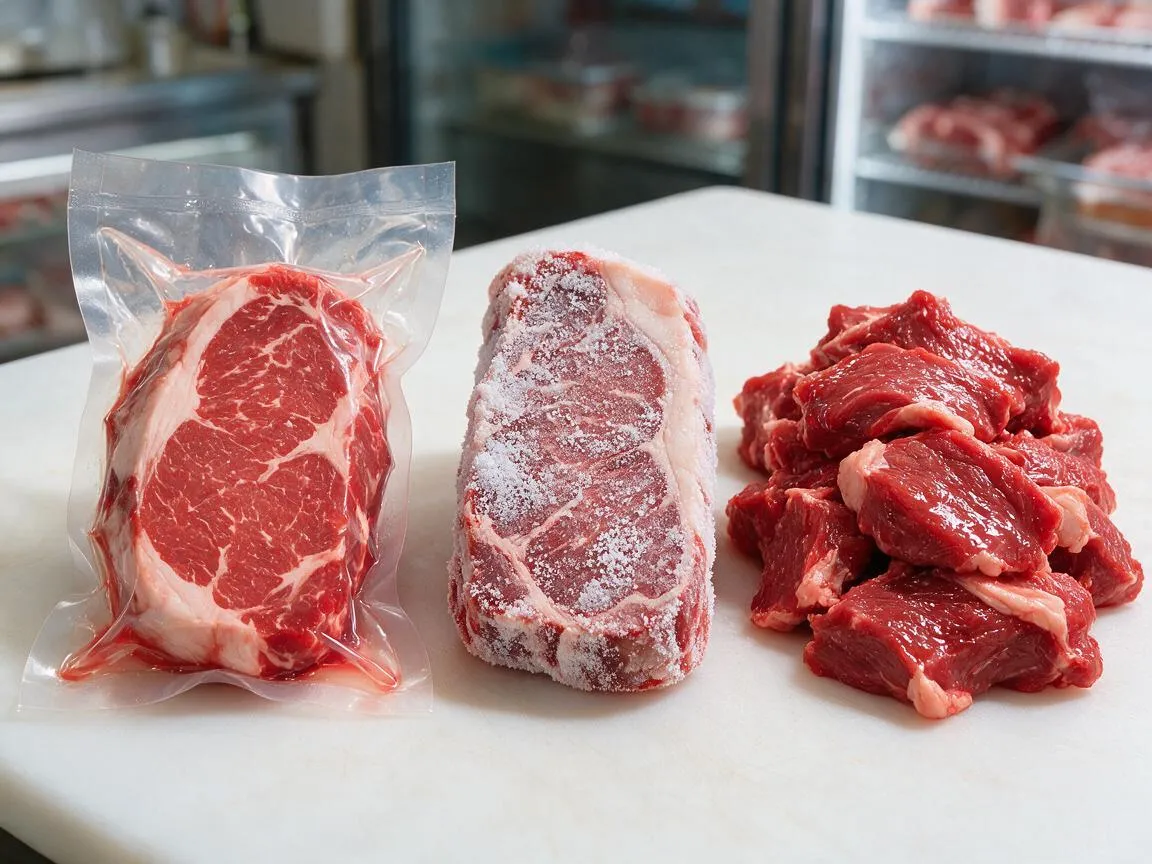
Chilled fresh beef is the mainstream category sold in supermarkets. After slaughter, it immediately enters a constant-temperature cold chain at 0–4°C, undergoes low-temperature acid discharge and rigor resolution for over 12 hours, and is then packaged using standard film wrap, vacuum, or modified-atmosphere packaging. Its shelf life ranges from 3 to 14 days.
Frozen Beef
Frozen beef is quick-frozen after cutting. Within 48 hours, the core temperature of the beef is reduced to –15°C to –18°C and stored below –18°C. The shelf life can reach 12 months, making it suitable for household stockpiling.
Hot Fresh Beef
Hot fresh beef goes directly to market within 2 to 6 hours after slaughter, without any low-temperature acid discharge treatment. It is typically sold fresh and cut on-site at wet markets.
Key Differences
Experts note that the primary difference among the three types of beef lies in the post-slaughter temperature control process. There is little variation in core nutrients such as protein and minerals; the main distinctions are in tenderness, juiciness, and flavor.
Hot fresh beef has a rich, original meaty aroma, but the muscle enters peak rigor 12 to 24 hours after slaughter, making the meat relatively firm. It is best suited for thin-slice hot pot cooking. Since it is sold at room temperature, it is prone to microbial growth and must be consumed on the same day.
Chilled fresh beef undergoes low-temperature acid discharge, which softens muscle fibers, resulting in tender and juicy meat. The low-temperature environment effectively inhibits bacterial growth. It is versatile and suitable for pan-frying, stir-frying, braising, and grilling, with only minor transformation of flavor compounds.
How to Choose Beef
Experts advise that product labels are an important basis for assessing beef quality, and the inspection priorities differ by category.
Chilled Fresh Beef
Check the packaging for the animal quarantine certificate and meat quality inspection certificate. Vacuum and modified-atmosphere labels indicate extended freshness.
Hot Fresh Beef
Check the daily quarantine notice posted at the stall. Prioritize beef with a dry surface and minimal exudation. Beef with severe water seepage is often re-thawed frozen meat sold as fresh.
Frozen Beef
Look for the "flash-frozen" label on the packaging. Storage temperature should be ≤ –18°C. Prioritize individually packaged products.