
-
 "Seeking Truth" magazine published an important article by General Secretary Xi Jinping, "Promoting the High-Quality Development of the Marine Economy." The article emphasizes that to promote Chinese-style modernization, we must efficiently develop and utilize the ocean and embark on a road to the sea with Chinese characteristics. The article systematically expounds the direction and path of promoting the high-quality development of the marine economy from the aspects of macro thinking and specific work, including five major ideas of focusing on innovation-driven, land and sea co-ordination, industrial renewal, harmony between people and sea and win-win cooperation, and deploys six key tasks of strengthening top-level design, enhancing marine science and technology capabilities, strengthening marine industry, optimizing bay planning, protecting marine ecology and participating in global governance.
 -
 From January to February this year, 60 China-Europe trains were opened at the eastern Guangzhou road-rail intermodal transport hub (Zengcheng West Station), an increase of 25 percent over the same period last year, achieving a "good start" in the New year ". As an important national logistics hub in the Guangdong-Hong Kong-Macao Greater Bay Area, the hub has opened a number of routes to Europe, Central Asia and ASEAN. Customs and other departments through the linkage platform, coordination of resources, to ensure customs clearance and other measures, to support the local manufacturing industry and e-commerce platform to use the train to accelerate the sea, to promote the hub to "supply chain hub" transformation and upgrading.
 -
The transportation department of Sichuan Province focuses on reducing the logistics cost of the whole society and promotes the transformation of the logistics system from "passive adaptation" to "active adaptation. Key initiatives include: making up for the short board of facilities with the adaptation of supply and demand as the guide; Promoting the "triple play" of channel network, logistics network and digital network to break the isolated island of data; Adding multimodal transport routes to optimize the transport structure; And seize the opportunity of "artificial intelligence transportation" to develop new intelligent productivity such as low-altitude logistics and automatic driving.
-
U.S. Trade Representative Greer announced on March 11 that he would launch a 301 investigation into 16 trading partners, including China, the European Union, Mexico, Vietnam, India and Japan. The investigation originated from Section 301 of the US Trade Act of 1974, which authorizes the US Trade Representative to investigate the so-called "unreasonable or unfair trade practices" of other countries and may recommend that the president impose unilateral sanctions. The move reflects the unilateralist tendencies of US trade policy and may have an impact on global trade relations.
-
In order to serve the construction of inland open hub, Pacific Property & Casualty Insurance Chongqing Branch innovatively builds an insurance one-stop platform serving 'Chongqing New Euro' and the new land and sea corridor in the west. The platform provides comprehensive risk protection for channel logistics by establishing an overseas claims service network covering 15 countries and regions, optimizing the claims process and applying digital technology, and establishing a three-level advance payment plan. At present, it has provided more than 645 billion yuan of risk protection for the China-Europe train and the new western land-sea channel, significantly improving the efficiency and reliability of insurance services for cross-border trade.
-
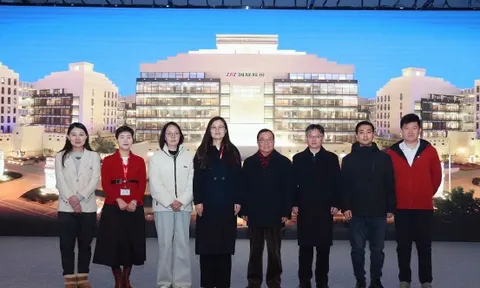 On March 6, Jia Guangdong, President of the China Agricultural International Cooperation Promotion Association and former Party Secretary of the Graduate School of the Chinese Academy of Agricultural Sciences, along with Vice President and Secretary-General Li Li, Executive Deputy Secretary-General of the Technical Transformation and Industrial Development Branch Le Rong, and Minister of Government and Enterprise Affairs of the Technical Transformation and Industrial Development Branch Liu Zeyang, were invited to visit IBIFDD. They were warmly received by IBI Vice President and FDD CEO Yin Haifeng, FDD Vice President Han Xiao, Director of Strategic Development Xu Ce, and Director of Operations Feng Bo. Both parties engaged in fruitful discussions on core topics such as the construction of the FDD seed cross-border trading platform and deep cooperation in industrial digitalization.
 -
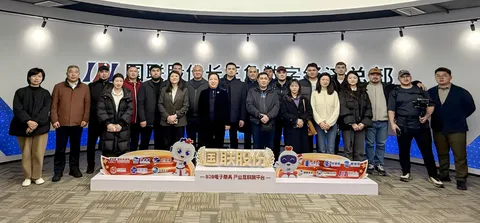 Spring returns to the shores of Taihu Lake, joining together for the grand Silk Road event. On March 6th, the IBI·LYDD Yangtze River Delta Digital Economy Headquarters welcomed an important delegation of Kazakhstan farmers. More than ten farm owners and agricultural industry representatives from Kazakhstan gathered with Chinese industry colleagues at the IBI Yangtze River Delta Digital Economy Headquarters to engage in in-depth discussions on topics such as agricultural planting, oil processing, cross-border supply chains, and digital agriculture, jointly mapping out a new blueprint for China-Kazakhstan agricultural industry cooperation. The delegation first visited the Yangtze River Delta Digital Economy Headquarters digital exhibition hall to gain a detailed understanding of IBI's achievements in industrial internet, digital supply chain, and agricultural big data.
 -
On March 9, the Shandong port Qingdao port opened an exclusive direct route to Iloilo, Philippines, and the maiden voyage was completed by the "Haifeng Hainan" ship. The route does not require transit, which can effectively reduce logistics costs and improve transportation efficiency for at least one day, connecting Qingdao, Iloilo, Cebu and other core ports to accurately match the trade needs of China and the Philippines. Qingdao Port ensures the smooth first voyage through efficient operations, demonstrates its service capabilities as an international shipping hub in Northeast Asia, and injects new momentum into deepening China-Philippines economic and trade cooperation.
-
This paper reports that during the spring ploughing period, nearly 20000 tons of imported potash fertilizer were transported to the Central Plains via Zhenjiang Port in Jiangsu Province through the new mode of "water-water combined transport. Thanks to the connection of the waterway of the river diversion project, the transportation route has been optimized, the transportation distance has been shortened by about 400 kilometers, the time has been reduced by nearly a week, and the comprehensive logistics cost has dropped from 158 yuan per ton to about 110-115 yuan, a drop of more than 35%. This model realizes the "one-ship direct" chemical fertilizer from the Yangtze River port to the Huaihe River Basin, effectively improves the efficiency and stability of agricultural transportation, and provides strong support for ensuring spring farming.
-
This article reports on the plenary meeting of the Shanghai delegation to the Fourth Session of the 14th National People's Congress, focusing on Shanghai's development strategy in the first year of the "15th Five-Year Plan. The meeting focused on accelerating the construction of the "five centers" of international economy, finance, trade, shipping and scientific and technological innovation, cultivating new quality productivity, and deeply implementing high-level reform and opening up. The article introduces in detail Shanghai's specific measures and plans in boosting consumption, supporting future industries, promoting cross-border financial development, strengthening technological innovation, and improving the level of urban smart governance, and shows Shanghai's blueprint for promoting high-quality development and serving the national strategy And determination.
-
 On March 4th, Deputy Secretary of the District Committee and District Mayor Zhang Yanlin led a team to visit IBI and held discussions on the "good start" work for the first quarter. IBI founder and CEO Qian Xiaojun participated in the discussion. At IBI, the district leaders' delegation gained a detailed understanding of the company's development achievements in digital supply chain, cross-border e-commerce, and green industries in the digital exhibition hall, followed by a symposium. Zhang Yanlin expressed the hope that IBI will continue to increase investment in R&D and soft information business, fully leverage the spillover driving effect of platform enterprises, deepen industrial investment cooperation, and promote higher-level win-win development for both parties.
 -
On March 6, 2025, the "COSCO SHIPPING Lily" ship built by Yangzhou COSCO SHIPPING Heavy Industries for COSCO SHIPPING was officially named and unveiled, marking the completion of the first batch of 4 16000TEU methanol dual-fuel series container ships. The ship has a total length of 366 meters and a container capacity of 16136 TEUs. It is equipped with green power systems such as domestic WinGD methanol dual-fuel main engine. Compared with traditional energy ships, it can reduce carbon dioxide emissions by about 120000 tons per year, and EEDI is more than 50% better than the baseline. The ship is also equipped with an intelligent control system to realize the intelligent management of the whole operation process. It is expected to be put into the South China-Southwest US e-commerce express route, injecting new impetus into the green shipping corridor.
-
On March 5, 2025, the world's first methanol dual-fuel ro-ro ship "Hong Kong Rong" completed its first green methanol filling operation in Hong Kong, marking an important breakthrough in the field of green shipping fuel in Hong Kong. The Secretary for Transport and Logistics of the Hong Kong Special Administrative Region Government, Chen Meibao, said that this move is a key step in the implementation of the Green Marine Fuel Filling Action Plan. Hong Kong is actively building a green fuel supply chain, taking advantage of the production advantages of the Mainland and the platform of connecting the world. Status, and strive to develop into an international green fuel filling and trading center.
-
In February 2024, the production and operation indicators of Wenzhou Port Group maintained steady growth, with cargo throughput exceeding 2.3 million tons, up 8.9 percent year-on-year, and container throughput exceeding 110000 TEUs, up 24.3 percent year-on-year. The growth was mainly due to the successful opening of the first Middle East ocean route, broadening the "Belt and Road" maritime logistics channel, while the "land-to-water" business and sea-rail intermodal transport and other multimodal transport networks continued to make efforts to attract the surrounding foreign trade sources. In the bulk cargo business, the successful introduction of new coal business and the completion of the first ship car roll-on operation, driving the throughput to continue to rise, laying the foundation for high-quality development throughout the year.
-
The article reports that 19 ports at home and abroad have joined the "container shipping punctuality cost reduction" plan deployed by the Maritime Safety Administration of the Ministry of Transport of China. Among them, Jiaxing Port has become the 19th port to join, and Ho Chi Minh Port in Vietnam is the first foreign port to join. The program aims to achieve punctuality, cost reduction and efficiency in maritime logistics and promote green shipping by helping container liners to book arrivals and arrive on schedule. Taking the newly opened Jiaxing Ho Chi Minh route as an example, a single voyage can significantly save fuel, reduce carbon emissions and stay in Hong Kong, reflecting the dual benefits of economy and environmental protection.