The four-tier planning system for the Port of Ningbo–Zhoushan has been fully established.
Recently, the "Special Plan for Port Points in the Ningbo Port Area of Ningbo-Zhoushan Port (2035)" (referred to as the "Plan") was approved by the Ningbo Municipal Government and jointly issued by the Ningbo Municipal Transportation Bureau and the Ningbo Marine Economy Development Bureau. The "Plan" lays out 52 port points, incorporating medium and small terminals with a capacity of 10,000 tons or less and a shoreline of no more than 500 meters into a unified planning and management system, marking the full establishment of the four-tier planning system of "port area—operation area—terminal area—port point" for Ningbo-Zhoushan Port.
In October 2024, the "Master Plan for Ningbo-Zhoushan Port (2035)" was jointly approved by the Ministry of Transport and the Zhejiang Provincial Government, introducing the "port point" level for the first time. Previously, port land planning was mainly divided into three levels: port area, operation area, and terminal area, without comprehensive coverage of medium and small terminals scattered across urban and rural islands.
"Large port areas such as Beilun, Chuanshan, and Meishan are the 'arteries' of the port, while the port points planned this time are the 'capillaries' extending to areas like Xiangshan Port and Shipu Port," said a relevant official from the Ningbo Municipal Transportation Bureau. "The master plan oversees the overall structure and main framework, while the port point plan addresses the finer details and peripheral areas."
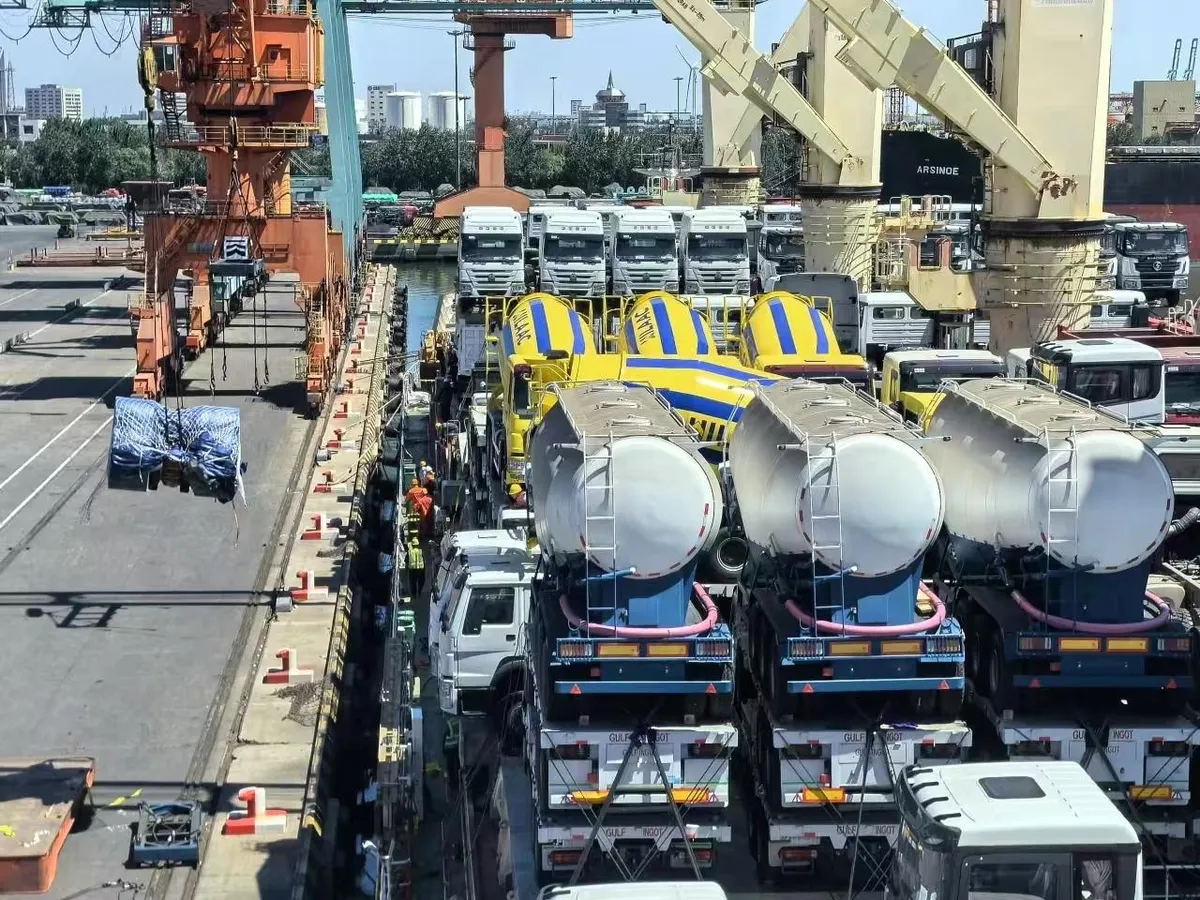
According to the "Plan," the 52 port points are divided into three categories: 19 urban and rural freight port points, with a planned port shoreline of 4,470 meters, forming a layout of "7 key port points + 12 general port points," mainly serving areas such as Yinzhou, Xiangshan, Ninghai, and Yuyao; 22 land-island transport and tourism port points, with a planned shoreline of 5,585 meters, catering to both island residents' travel and coastal tourism; and 11 port support system points, with a planned shoreline of 1,596 meters, including 2 berthing points for port service vessels and 9 fuel supply points.
According to the deployment of the "Plan," the establishment of port points must meet conditions such as suitability for port construction, well-developed supporting facilities for collection and distribution, and ease of operation and maintenance. It also adheres to principles of serving the public, strictly controlling the number of points, and setting them up sparingly while balancing shoreline development and protection. During the "15th Five-Year Plan" period, Ningbo will focus on advancing the construction or renovation of port points such as Hepu Beiniu Outer, Shipu Pingfeng Mountain, and Hepu Offshore Wind Power Support, ensuring the development of port-adjacent projects like Jin Qimen Nuclear Power, commercial aerospace, and the Green Energy Island. It will also guide the transformation of transport and tourism port points such as the Asian Sailing Center, Xize Ferry, and Tantou Mountain, and promote the construction of support system port points like Daxie, serving ship refueling, oily wastewater recovery, and regulating the operation of facilities like the Dongmen Oil Depot to provide refueling support for fishing vessels.
-
Guarding the Yangtze River's safety, benefiting the livelihood of riverside residents—Anqing Port Maritime Office weaves a dense safety net for the Anqing section of the Yangtze River.3836
-
A thousand sails head to sea, Lianyungang Maritime ensures safe navigation for the full opening of the fishing season.3273
-
The Dalian Port Lightship Returns to Duty in "Stylish Attire"3374
-
Let the treasures of the grasslands reach across rivers and seas.5006
-
The East China Sea Second Rescue Flying Team of the Ministry of Transport has released an “AI” action plan.3343