CCCC Shanghai Navigation Bureau’s Survey and Design Research Institute has launched practical activities in the Yangtze River Estuary.
To further promote the integration of industry and education, break down the barriers between classroom theory and industry practice, and guide young students to build a solid professional foundation and cultivate a sense of national responsibility on the engineering frontlines, on August 17, the CCCC Shanghai Dredging Survey and Design Institute invited faculty and students from the School of Marine Science and Engineering at Shanghai Maritime University to visit the major project site at the Hengsha Shoal Project Department. Together, they conducted the "10,000 Engineers Enter the Classroom" practical activity. Through on-site observation, immersive teaching, and alumni dialogues, they experienced a vivid and dynamic "professional practice class" at the confluence of the Yangtze River and the sea.
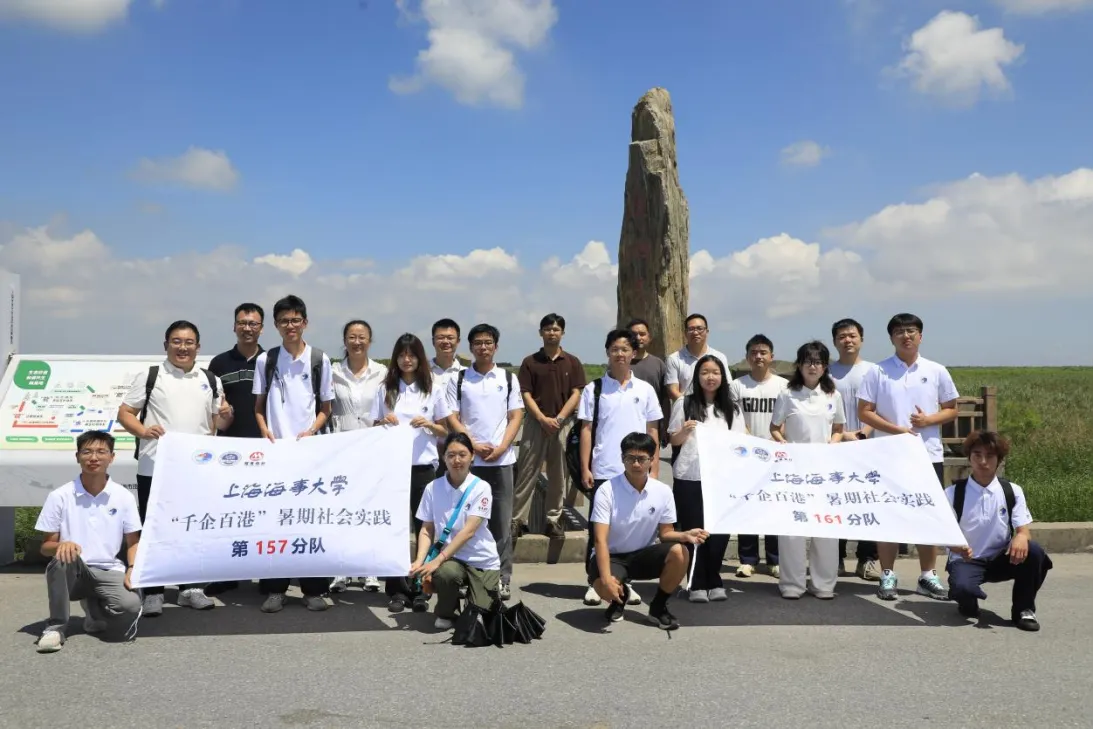
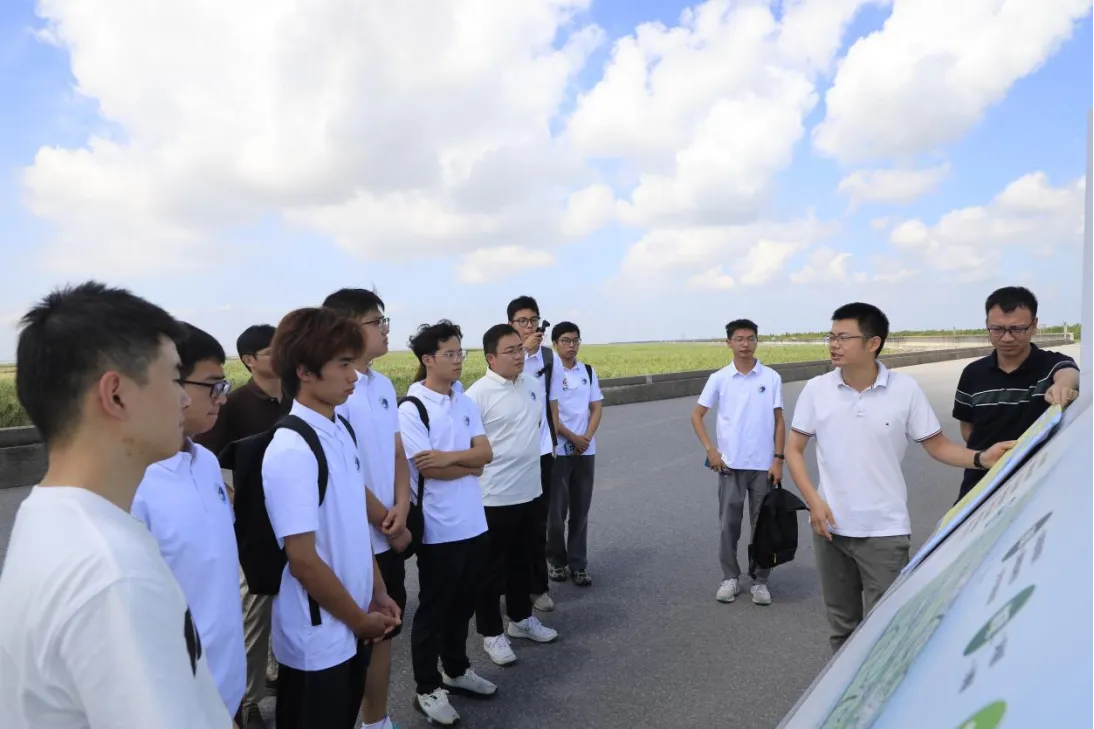
Here, the waters of the Yangtze River meet the sea, with surging waves carrying sediment rushing toward the East China Sea. The faculty and students visited the project site, looking westward at the main island of Hengsha, eastward at the newly reclaimed land of Hengsha East Shoal, and southward at the deep-water channel of the Yangtze River estuary. How do dredging projects deepen and widen channels? How do regulation projects redirect currents, block sediment, and protect tidal flats? How do reclamation projects transform the sea into fertile land? Through professional explanations, a grand vision of the coordinated development of port and waterway engineering unfolded before the faculty and students, giving them an intuitive understanding of waterway engineering.
Chen Yu, a design engineer from the Yangtze River Estuary Waterway Regulation Team of the CCCC Shanghai Dredging Survey and Design Institute, used Hengsha Island as a platform to share the island's continuous "growth" over the past 20 years from the perspective of an engineering builder. Using the Yangtze River Estuary Waterway Regulation as the main thread, he elaborated on the institute's participation in major projects at the Yangtze River Estuary over the past half-century. He vividly demonstrated the impact of engineering construction on navigation conditions, topography, and the ecological environment of the Yangtze River Estuary and its surroundings, as well as the value it has created for urban development, turning theoretical knowledge from textbooks into tangible, perceivable engineering projects.
During the discussion session, Wang Haolin, a design engineer from the Inland Waterway Research and Design Team for the Plain River Network Region at the CCCC Shanghai Dredging Survey and Design Institute, used the "Eastern Extension Project of the Dalu Line," a key project promoted during the 14th Five-Year Plan by the State Council, as an entry point. He explained how the first high-grade waterway in the Yangtze River Delta, artificially created in a tidal flat area, connects inland waterways with the deep-water channel of the Yangtze River Estuary and Yangshan Port. This allows inland container ships to reach the sea directly via the Dalu Line without detouring. He also described how this golden waterway, bearing the mission of river-sea intermodal transport, was transformed step by step from a planning blueprint into reality by the hands of engineers.
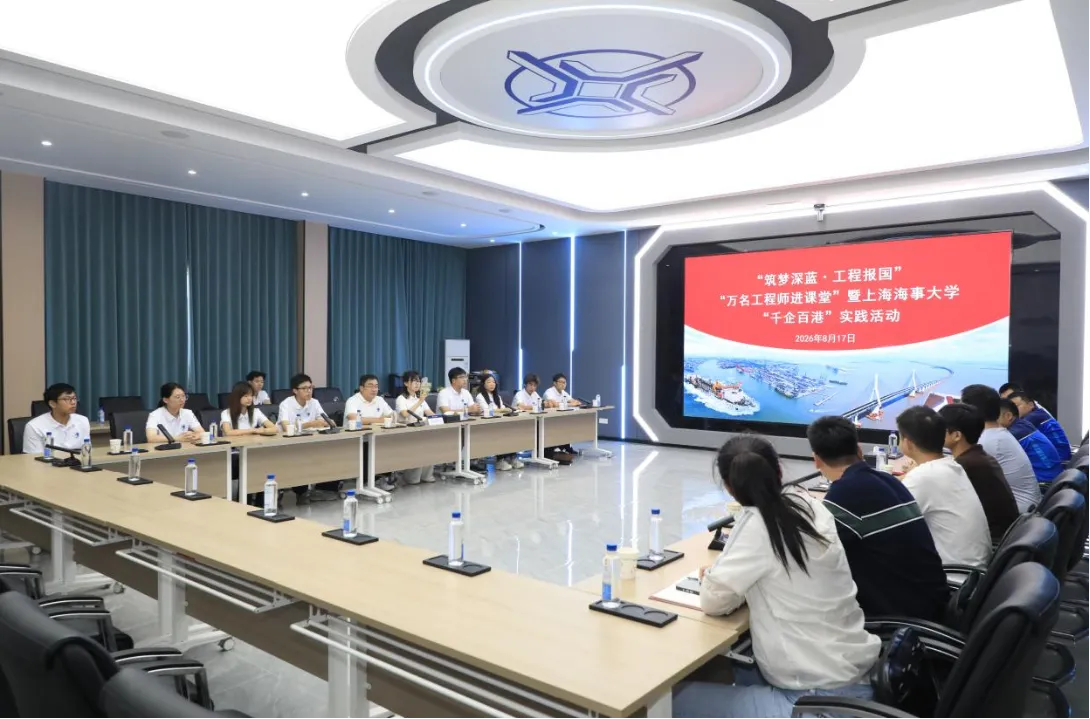
Students enthusiastically asked questions about industry prospects, career choices, skill preparation, and the transition from campus to the engineering frontlines. Outstanding alumni and engineer representatives from the CCCC Shanghai Dredging Survey and Design Institute and the Hengsha Shoal Project Headquarters, who are also graduates of Shanghai Maritime University, shared their insights on professional development and dedication to the industry based on their own experiences. They encouraged the students to cherish their time in school, build a solid theoretical foundation, maintain a keen awareness of engineering sites, and, in the future, showcase their talents on the frontlines of port and waterway construction, taking practical actions to ensure the smoothness and safety of deep-water channels.
This activity was a powerful exploration of deepening school-enterprise collaboration and practical education between the CCCC Shanghai Dredging Survey and Design Institute and Shanghai Maritime University. Through a three-dimensional practical model of "visiting engineering sites, engaging in dialogues with frontline alumni, and understanding industry spirit," young students established a genuine understanding of the port and waterway industry during their professional development phase. Under the grand theme of "Building Dreams in the Deep Blue" and "Serving the Nation through Engineering," they deeply felt the perseverance and innovation of generations of engineers striving for maritime strength.
-
Guarding the Yangtze River's safety, benefiting the livelihood of riverside residents—Anqing Port Maritime Office weaves a dense safety net for the Anqing section of the Yangtze River.3836
-
A thousand sails head to sea, Lianyungang Maritime ensures safe navigation for the full opening of the fishing season.3273
-
The Dalian Port Lightship Returns to Duty in "Stylish Attire"3374
-
Let the treasures of the grasslands reach across rivers and seas.5006
-
The East China Sea Second Rescue Flying Team of the Ministry of Transport has released an “AI” action plan.3343