
Vietnamese Basa Fish Enters Over 550 Japanese Sushi Restaurants(Sep 22)
Vietnamese Basa Fish Enters Over 550 Japanese Sushi Restaurants
Source: shijieshipin.com | September 20, 2026
URL: https://www.shijieshipin.com/news/show-271247.html
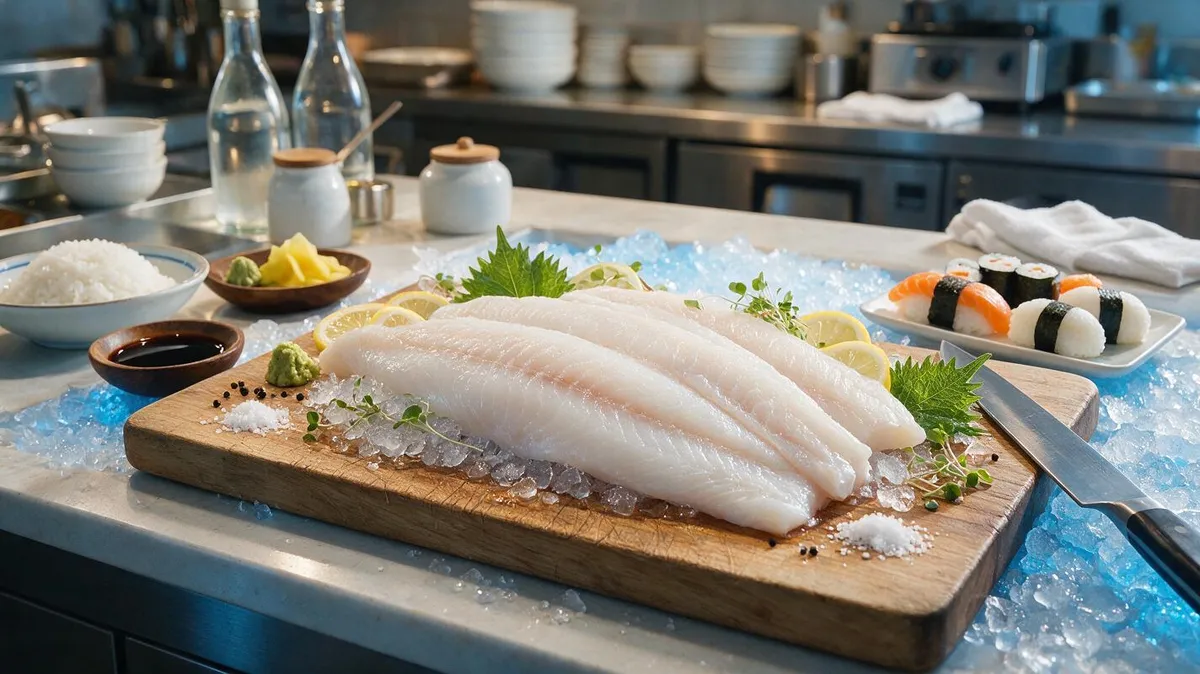
On September 18, 2026, the Vietnam Association of Seafood Exporters and Producers (VASEP) announced that Japanese seafood companies' interest in Vietnamese basa fish (pangasius) continues to rise, with Japanese seafood giant Kyokuyo recently listing basa fish as a key promoted product. Previously, Vietnamese basa fish had already entered the menu system of Kura Sushi, a major conveyor-belt sushi chain in Japan with over 550 outlets.
The significance of this development extends beyond adding a new sales channel. Japan has long preferred marine fish and wild-caught seafood products. For basa fish, a freshwater farmed white-fish species, to enter the sushi chain system, it must meet stringent specifications for food safety and supply stability. In late 2025, Vietnamese basa fish first appeared on the Kura Sushi menu, marking an important milestone in its entry into Japan's mass dining system.
Japanese market acceptance of basa fish is also expanding. VASEP data shows that in the first seven months of 2026, Vietnam's basa fish exports to Japan reached USD 31 million, up 20% year-on-year. In July alone, export value was approximately USD 5 million, a 30% year-on-year increase. Frozen basa fish fillets remained the dominant export product, accounting for about 82% of total exports to Japan, while processed and value-added products accounted for approximately 11%.
The product structure reveals clear differences between the Japanese market and traditional bulk frozen-fish markets. Basa fish's entry into Japan is not based solely on low-price competition but is gradually extending toward sliced, cooked, seasoned, and food-service-ready processed products. Japanese consumers' demands for food safety, traceability, specification consistency, and year-round stable supply require Vietnamese processing companies to build more stable production systems spanning aquaculture, raw material control, and processing export.
On September 11, 2026, VASEP released additional data showing that Japan has become one of the fastest-growing markets for Vietnamese basa fish. In the first seven months, exports to Japan grew 20% year-on-year, and the proportion of processed and value-added products in Japan's import mix is higher than in markets that primarily rely on frozen fillets. Sushi, sashimi, and Japanese-style processed foods are seen by Vietnamese companies as potential application scenarios for further basa fish market penetration in Japan.
On September 18, Kyokuyo held a seafood product showcase and business matching event in Osaka, attended by approximately 760 clients and partners, with about 500 seafood and processed food products on display. Basa fish and herring were listed as key promoted products, primarily because prices of some traditional Japanese white-fish species are relatively high, wild resource supply is subject to fluctuation, and importers and food-service companies are increasingly interested in competitively priced, stably supplied alternative raw materials.
The growth of Vietnamese basa fish in Japan is also related to changes in the global white-fish market. Traditional white-fish resources such as cod and pollock are affected by quota adjustments, fishing conditions, and trade policies, prompting procurement companies to seek alternative raw materials with stable specifications and year-round availability. Basa fish, with its large-scale aquaculture, diverse processing specifications, and relatively stable supply cycle, is gaining new market space under this procurement logic.
The barriers to entry in the Japanese market have not been lowered as a result. For basa fish products entering the sushi chain and specialized food distribution system, raw material specifications, texture, food safety, processing standards, and batch consistency all need to be maintained at a consistent level over the long term. Kyokuyo's continued expansion of basa fish promotion on September 18, combined with Vietnam's 20% export growth to Japan in the first seven months, indicates that Japanese market channel development has gradually extended from single-product trial sales to the food-service, processing, and specialized distribution systems. Whether procurement scale can be further expanded will still depend on specific product specifications and stable supply capacity.