
Japan Surimi Shortage: Vietnamese Basa Fish Surimi Emerges as Alaska Pollock Alternative(Oct 21)
Japan Surimi Shortage: Vietnamese Basa Fish Surimi Emerges as Alaska Pollock Alternative
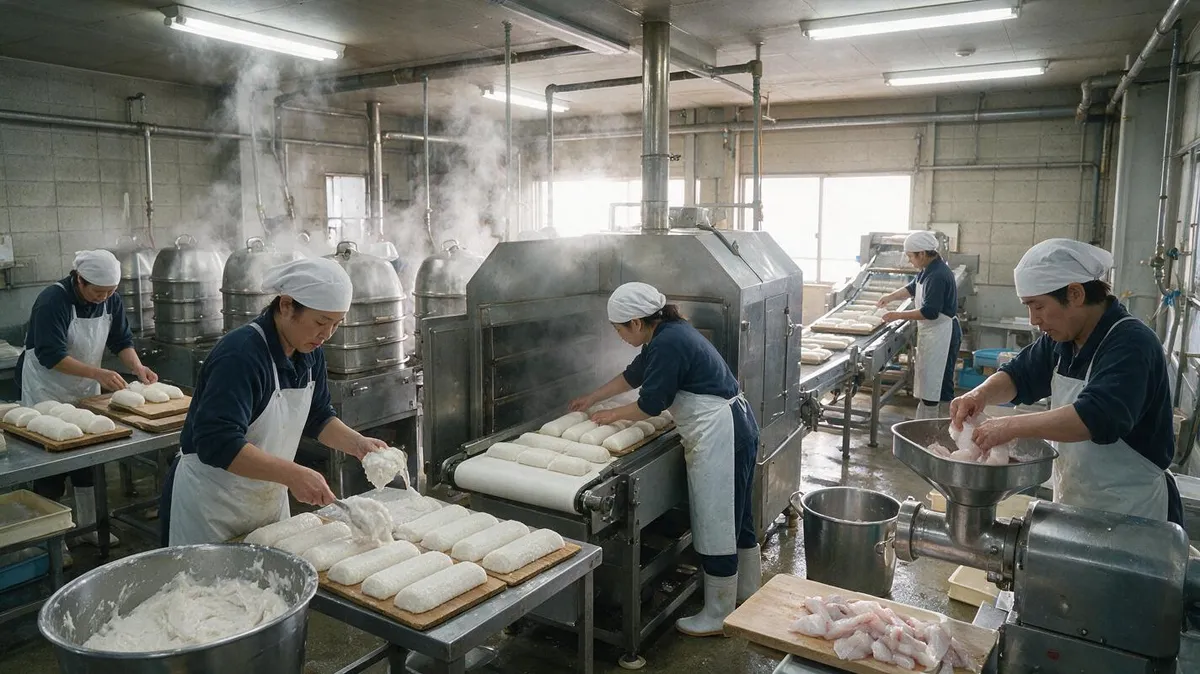
Source: World Food (shijieshipin.com)
https://www.shijieshipin.com/news/show-272774.html
On October 15, the Japan Kamaboko Association issued a crisis declaration, warning that surimi prices are at historic highs with limited supply. The main raw material for Japanese kamaboko and chikuwa surimi products is Alaska pollock surimi, and procuring this ingredient is becoming increasingly difficult.
Price signals have materialized in actual transactions. In September, Japan's Alaska pollock surimi B-season contract prices rose 25% to 35% compared to the A-season, with benchmark Grade A prices exceeding 700 yen/kg (approximately $4.38/kg) for the first time, marking six consecutive quarters of increases. Customs data corroborates this: in the first half of 2026, Japan imported 42,896 tons of frozen pollock surimi, down 12% year-on-year, while import value increased to 18.2 billion yen, up 3%. June single-month imports fell to 8,343 tons, down 21% year-on-year.
Supply contraction is the primary driver of this price surge. The Sea of Okhotsk 2026 A-season pollock catch was approximately 1.1 million tons, down only 4.4% year-on-year, but onboard surimi production plummeted over 20%. Alaska A-season surimi production fell 10% year-on-year, and B-season production as of July 25 plummeted 41% year-on-year. Russian producers similarly redirected raw materials toward more profitable fillet and headless/gutted products, and planned to raise B-season surimi block quotes by approximately 15% starting in June.
This price surge weighs on an industry in long-term decline. Japanese surimi product output has fallen from a peak of over 1 million tons in the 1970s to 358,000-389,000 tons in 2024, with industry concerns that output may fall below 360,000 tons. Using 2020 as the base year, Japan's surimi product consumer price index reached 130.4 by December 2025, with kamaboko and chikuwa sub-indices at 133.4 and 131.4 respectively.
According to Nikkei Minato Shimbun, the traditional difficulty in procuring U.S. surimi, which has dominated the Japanese market, is pushing Japanese processors to seek new raw material sources. Basa fish surimi from Asian freshwater aquaculture has emerged as a candidate alternative.
Basa fish surimi is being considered as a substitute for Alaska pollock in the production of kamaboko, chikuwa, and other surimi products. The appeal of basa fish lies in helping Japanese enterprises diversify suppliers and reduce costs. However, whether it can be adopted at scale depends on its texture, gel strength, quality, and commercial acceptance.
Vietnamese basa fish has built considerable market presence in Japan in recent years. According to VASEP data, Vietnam's basa fish exports to Japan in the first nine months of 2025 reached $34 million, up 14% year-on-year, ranking third among Japan's white-flesh fish imports, behind only the United States and Russia. Frozen basa fillets are the primary product, with exports reaching nearly $30 million in the first nine months, up 11% year-on-year. Deep-processed product exports surged 47% year-on-year.
The cost advantage of Vietnamese basa fish in the Japanese market partly stems from trade arrangements. Under the Comprehensive and Progressive Agreement for Trans-Pacific Partnership (CPTPP), Vietnamese basa fish enjoys near-zero tariff treatment in Japan, offering price advantages over other imported fish. The end-user channel has also opened up; in autumn 2025, the Japanese conveyor belt sushi chain Kura Sushi incorporated Vietnamese basa fish into its sushi menu.
Basa fish still faces quality thresholds to enter Japanese kamaboko and chikuwa production lines. Kamaboko and chikuwa have specific requirements for surimi gel strength, and basa fish, as a freshwater species, differs from the marine pollock in texture and gel properties. Whether the supply constraints and high prices highlighted in the Japan Kamaboko Association's crisis declaration will actually push processors toward basa fish surimi depends on whether these quality indicators can meet end-product requirements.
-
Japan Surimi Shortage: Vietnamese Basa Fish Surimi Emerges as Alaska Pollock Alternative(Oct 21)8270
-
Newcastle Disease Confirmed at Brazilian Farm, Chicken Exports to China May Face Suspension(Oct 21)8955
-
Eggs: Bottom-Fishing Sentiment Rises, Can Egg Prices Stabilize?(Oct 20)9015
-
US Modifies Import Requirements for Highly Pathogenic Avian Influenza Poultry and Egg Products(Oct 20)9117
-
Vietnam Basa Fish Farm-Gate Price Hits Record High of 37,000 VND/kg(Oct 20)7217