
Egg Weekly: Egg Shortage Not Over Yet! Price Drop Imminent?
Domestic Egg Market Analysis
1.1 Egg Market Price Analysis
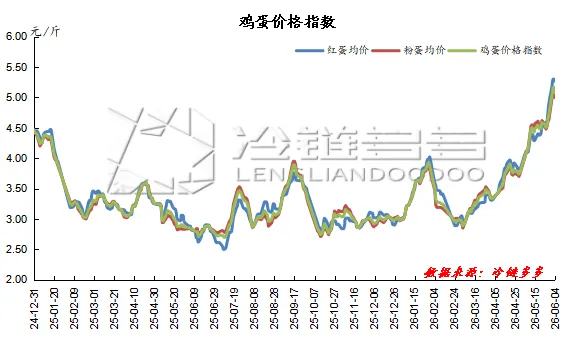
This week, the egg market saw a strong upward trend, with prices reaching a new high for the same period. As of Thursday, the average price of red eggs was 5.27 yuan/jin, and the average price of pink eggs was 5 yuan/jin, a price difference of 0.27 yuan/jin, an increase of 0.45 yuan/jin compared to last Thursday. Although the total number of laying hens is at a historical high, the number of newly laying hens is low, the age structure of the chickens is aging, and the rainy season has led to a decline in egg production, resulting in insufficient effective supply in the market and a structural shortage of eggs. At the same time, inventory remains at an extremely low level, and this vacuum further amplifies the upward elasticity of prices. The concentrated stockpiling before the Dragon Boat Festival has fully commenced, the sales speed has accelerated, and traders' purchasing enthusiasm has increased, providing solid upward momentum for egg prices.

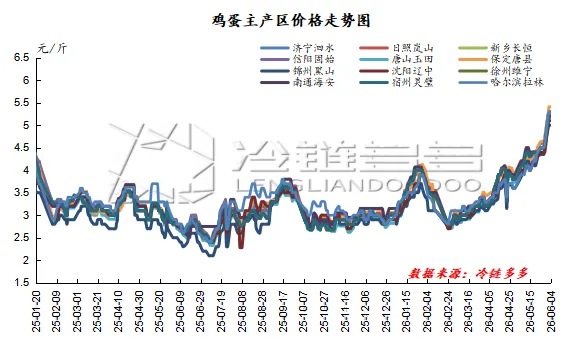
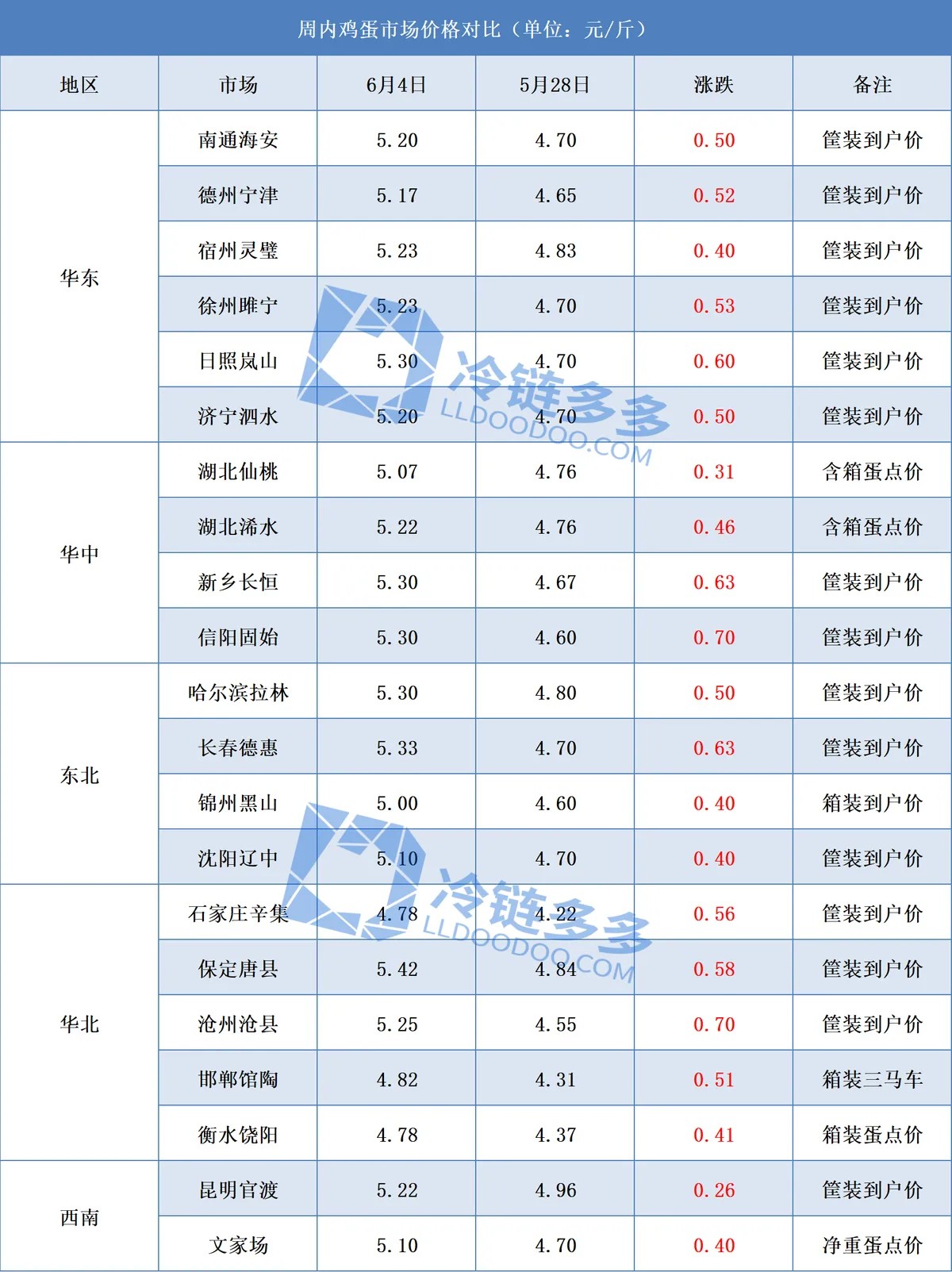
Production Area Market: On Thursday, the average price of eggs in major production areas was 5.25 yuan/jin, an increase of 0.47 yuan/jin compared to last Thursday.
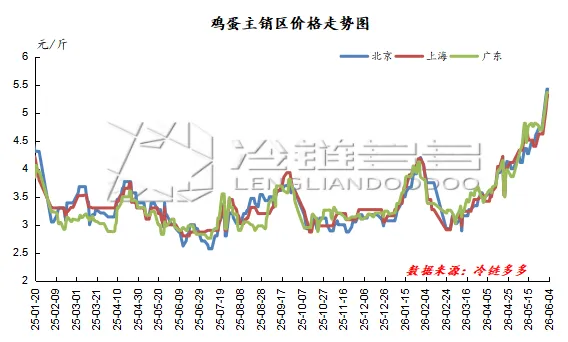
Sales Market: On Thursday, the average price of eggs in major sales areas was 5.23 yuan/jin, an increase of 0.52 yuan/jin compared to last Thursday.
1.2 Egg Market Price Trend Chart
1.3 Comparison of Domestic Egg Regional Market Prices This Week
Analysis of Laying Hen Inventory and Slaughter
2.1 Inventory Analysis
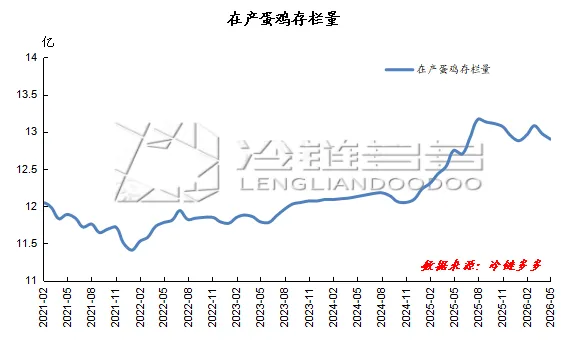
This week, the inventory of laying hens showed the core characteristic of a high total inventory but an accelerated decline compared to the previous week. The structural mismatch between the total inventory and effective production capacity is the key to this round of price increases. The current inventory pattern is characterized by a still high total inventory but an accelerated marginal contraction, insufficient effective production capacity, and structural imbalance. It is this contradictory pattern of high on-paper inventory and actual egg shortage that has supported the strong rise in egg prices against the trend during the traditional off-season.
2.2 Slaughter Analysis
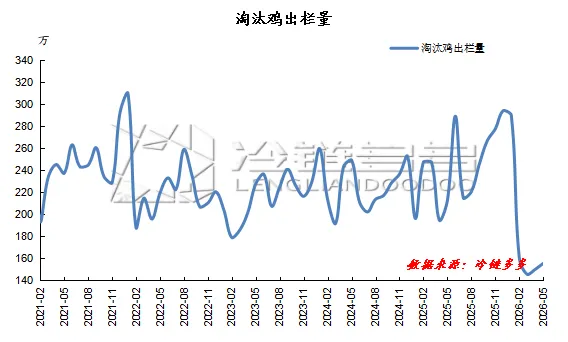
This week, the slaughter volume in the egg market increased slightly compared to the previous week but remained at a historically low level for the same period. The core reason for the persistently low slaughter volume lies in the continued expansion of breeding profits, reaching the highest level for the same period in history. To maintain profitability from egg production, farmers are generally choosing to hold back sales and delay culling, extending the culling age to an average of 513 days. Looking at the inventory structure, hens over 450 days old account for approximately 9.51% of the culled stock, theoretically indicating a certain amount of stock available for culling. However, the mentality among farmers that the longer a hen is raised, the more profit it will generate results in a low actual willingness to sell.
Egg Demand Analysis
This week, egg market restocking demand peaked, with a significantly faster sales pace, directly pushing prices in production areas above 5.20 yuan/jin, and retail prices in many areas stabilizing above 5 yuan/jin. However, with egg prices rising to high levels, downstream sentiment has become more cautious. High temperature and humidity environments make storage more difficult, and traders are mostly adopting a just-in-time purchasing and sales strategy to control inventory risk, resulting in a significant decrease in the willingness to hoard. Furthermore, this week's restocking phase is nearing its end, and the marginal support for demand at the weekend has weakened.
Egg Market Outlook
From the supply side, current breeding profits have surged to their highest level for the same period in history, leading to delayed culling. Meanwhile, the increasing number of chicks added to the flock during the first quarter will gradually convert into new laying hens from mid-to-late June, gradually filling the supply gap created earlier. The inflection point from tight to loose supply is approaching.
From the demand side, the market is gradually transitioning to the traditional off-season, with school holidays and reduced demand for group meals in the latter part of the month. More importantly, high temperature and humidity will significantly increase the risk of egg storage spoilage, and demand support is expected to weaken significantly.
In summary, the egg market is expected to face downward pressure next week, but the downside is limited. Prices for red and pink eggs may differ, with adjustments around 0.15 yuan/jin, and the average price in major producing areas at 5-5.15 yuan/jin.