
China's Roasted Eel Exports to Japan Surge 84%, Hitting a Five-Year High(Sep 9)
China's Roasted Eel Exports to Japan Surge 84%, Hitting a Five-Year High
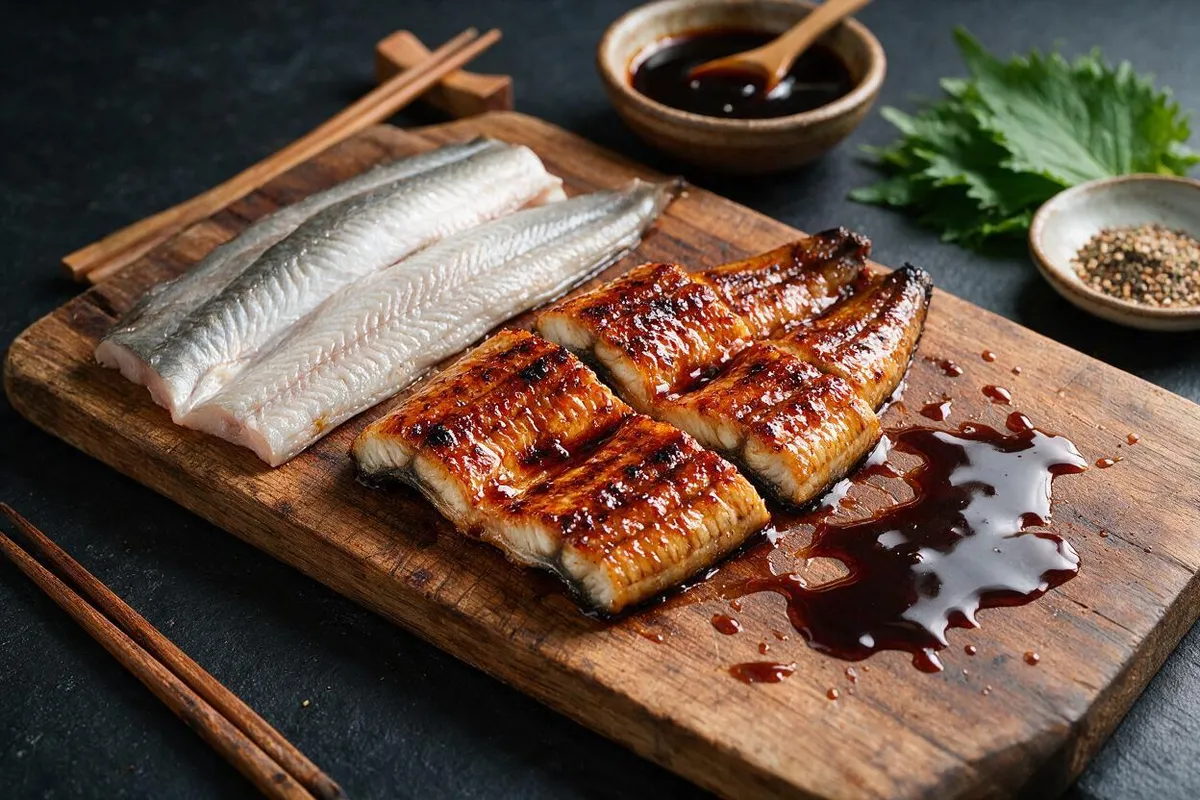
According to Japan Customs statistics, Japan's imports of processed eel products reached 4,784 tonnes in July 2026, a year-on-year increase of 84% and the highest July figure in the past five years. The previous four years saw only 3,020 tonnes in 2024, 2,961 tonnes in 2021, and 2,600 tonnes in 2025 for the same month. July alone exceeded last year's trough by more than 2,100 tonnes. The average import price was 1,929 yen/kg, down slightly year-on-year but up 56 yen month-on-month, maintaining a pattern of rising volume and stable prices throughout the summer. After this data was disclosed by Japanese trade media in late August, Chinese eel industry association channels confirmed on September 2 that both China's roasted eel exports to Japan and Japan's cumulative eel-year imports had hit five-year highs.
Extending the timeline to the eel year (September of the previous year through August of the current year), cumulative imports for the 2026 eel year (September 2025 to July 2026) reached 25,418 tonnes, also the highest for the same period in five years, significantly exceeding the full-year totals of 21,112 tonnes for the 2025 eel year and 20,066 tonnes for the 2021 eel year. With one month remaining in the current eel year, the cumulative volume has already surpassed the totals of the previous two complete eel years. In June, Japan imported 4,649 tonnes of processed eel products from China, up 45% year-on-year, also a five-year high for the month, compared with only 3,221 tonnes in June 2024 and 3,206 tonnes in June 2025.
The Doyo Ushi Day period in late July (July 24-26, the traditional Japanese occasion for eating eel) pushed the market to its peak. Japanese trade media compiled feedback from multiple retail channels: one store saw three-day sales reach 130% of the same period last year, a major convenience store chain achieved 120% of last year's July total, and several major retail outlets posted figures of 117%, 105%, 126%, 121%, and 108%, representing broad-based growth. In previous years, domestic Japanese eel dominated the shelves during this period, but this year Chinese products took over. A supermarket in Suginami Ward, Tokyo, priced Chinese-produced kabayaki eel at 998 yen per piece in late May, while comparable Japanese domestic products on the same shelf ranged from 1,580 to 1,980 yen, a price gap exceeding 60%. The wholesale gap was equally pronounced: Japanese fresh-fish company Gyokuryoku's wholesale price for Chinese frozen kabayaki in May was approximately 2,000 yen/kg, with some batches 40% cheaper than the same period last year, while its Kyushu-produced frozen domestic eel wholesale price in mid-May was about 6,500 yen/kg, down only slightly over 10% year-on-year.
Domestic eel prices could not come down, given the cost structure. According to calculations by the Hamana Lake Fish Farming Cooperative, feed accounts for 30% of farming costs, elry costs for 30%, and fuel and labor for 40%. The anchovies used as raw material for fishmeal in eel feed saw reduced catches in Peru's main production areas, driving up fishmeal prices, while fuel and labor costs remained high. The Chinese side told a different story: the 2025 East Asian elver season was bountiful, with China's stocking volume reaching 85 tonnes, eight times the previous year's level. Japan's domestic stocking was 18.7 tonnes, up 15% year-on-year but still within the annual ceiling of 21.7 tonnes. With more elry stocked, once the grow-out cycle completed, raw material prices naturally fell. Japan's Ministry of Finance trade statistics showed that the average import price of Chinese kabayaki eel from January to March 2026 was 2,225 yen/kg, down 10% year-on-year, and by July, the overall average import price of Japan's processed eel products had declined to 1,929 yen/kg.
The information disclosed by association channels on September 2 also provided an anchor for subsequent orders. At a recent Japan Eel Importers Association information exchange meeting, the industry consensus was that the outlook for Chinese processed eel products in the Japanese market remained broad going forward. Prices of saury, autumn salmon, and other major fish species continued to stay high, making moderately priced, consistently quality Chinese roasted eel even more competitive on value. Japanese traders projected that total roasted eel imports for the current eel year could exceed 27,000 tonnes. If realized, this figure would be nearly 30% higher than the 21,112 tonnes of the 2025 eel year. Feedback from the sales side corroborated the data: despite heavy rain in the Kanto region in August, trading did not decline, downstream roasted eel processing enterprises were running at full capacity with tight inventory, and additional orders continued to flow in.
On September 7, the Eel Working Committee of the China Fisheries Association issued its 70th weekly market report on Chinese eel. In Fujian, pond-side purchase prices for American eel averaged 67,000 yuan/tonne (67 yuan/kg) for 4P, 57,000 yuan/tonne for 3P, and 47,000 yuan/tonne for both 2.5P and 2P. Kitchen eel prices were 46,000 yuan/tonne for 1.5P, 45,000 yuan/tonne for 1.2P, and 45,000 yuan/tonne for 1.0P, with no quote for 5P. Guangdong's Japanese eel commanded higher prices: live eel averaged 80,000 yuan/tonne for 5P, 70,000 yuan/tonne for 4P, and 60,000 yuan/tonne for both 3P and 2.5P. Roasted eel raw material was priced at 65,000 yuan/tonne for 5P, 55,000 yuan/tonne for 4P, and 50,000 yuan/tonne for both 3P and 2.5P. Kitchen eel averaged 100,000 yuan/tonne. In terms of size structure, Japanese buyers this year primarily purchased 3P to 4P live eel, supplying directly to eel restaurants and partly to roasted eel processing plants. Live eel exports had established four bases: Shanghai, Weihai, Taishan, and Fuqing. Among them, the Shanghai Pudong transit facility, operated by Tianma Technology, received its aquatic animal export transit qualification on April 10 and was dedicated to air freight exports to Japan.
The final month of the eel year will not be settled until October, but the procurement pace at domestic ponds has already indicated the direction. Raw eel purchasing by roasted eel plants in Fujian and Guangdong continued into early September without interruption. If the 27,000-tonne target proceeds at the current pace of over 2,500 tonnes per month, by the October close of the eel year, Chinese roasted eel will have completed a full transformation in the Japanese market, from an affordable alternative to the primary volume driver.