
Brazil's October Chicken Exports Hit the Highest Monthly Record of 2026; ABPA Joins the CIIE(Nov 11)
November 11, 2026
LLDD-global
8107
Guide
Highlights at a glance
In October 2026, Brazil achieved record-breaking chicken exports, totaling 512,800 tonnes, a 2.3% increase compared to the same period last year. Export revenue reached US$994.1 million, marking a 14.9% year-on-year growth. China remains a key partner, importing 467,700 tonnes year-to-date, despite past trade restrictions. ABPA, in partnership with ApexBrasil, participated in the China International Import Expo (CIIE) to promote Brazilian animal protein, strengthen ties with Chinese stakeholders, and consolidate Brazil's position in the global market. This collaboration highlighted Brazil's exceptional production capacity, quality standards, and commitment to sustainable practices.
Brazil's October Chicken Exports Hit the Highest Monthly Record of 2026; ABPA Joins the CIIE
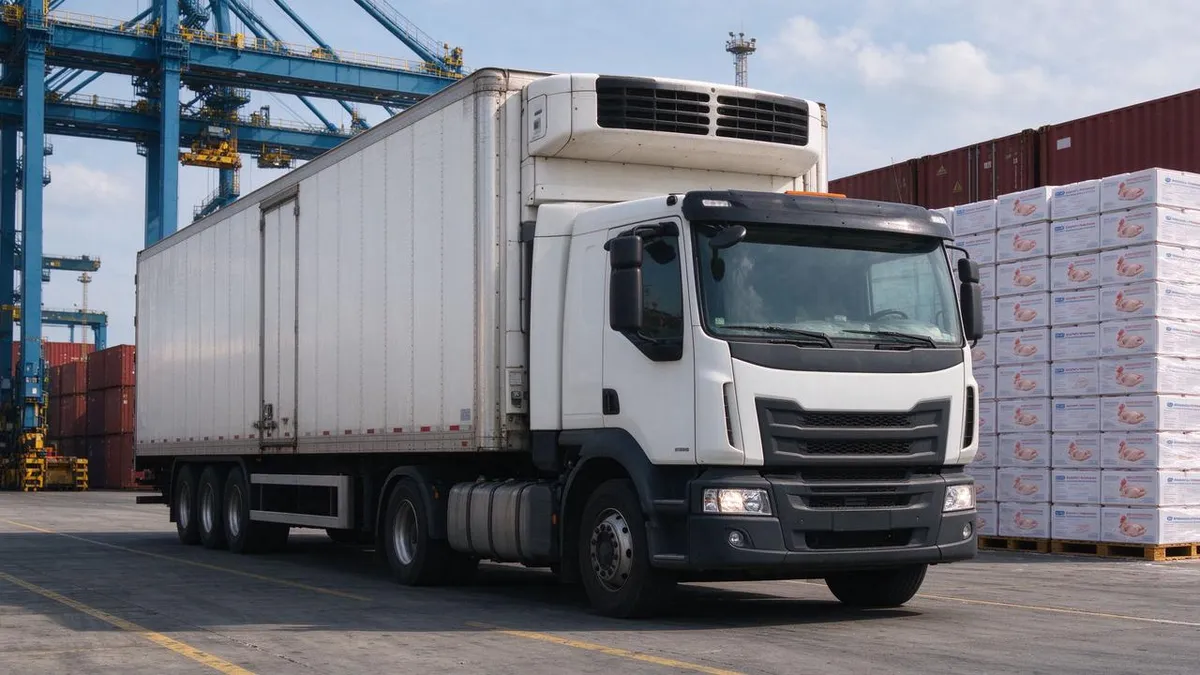
According to statistics from the Brazilian Animal Protein Association (ABPA), Brazilian chicken exports totaled 512,800 tonnes in October. This was not only the highest monthly figure of 2026, but also 2.3% above the 501,400 tonnes recorded in the same period last year. October export revenue reached US$994.1 million, up 14.9% year on year.
In the first ten months of the year, cumulative chicken exports reached 4.9 million tonnes, up 12.7% year on year; cumulative export revenue reached US$9.7 billion, up 20.4%.
In October, the UAE was the top destination for Brazilian chicken, importing 53,200 tonnes (+29.8%), followed by Saudi Arabia with 47,900 tonnes (+30.6%), China with 46,800 tonnes, Japan with 38,700 tonnes (+30.4%), and South Africa with 30,100 tonnes (-44.1%). China suspended imports of Brazilian poultry meat in October 2025 after a single case of highly pathogenic avian influenza; the issue was resolved at the end of last year.
In January–October 2026, China ranked first with imports of 467,700 tonnes (+104.3% year on year), followed by the UAE with 396,800 tonnes (+0.8%), Japan with 394,600 tonnes (+16.9%), Saudi Arabia with 374,900 tonnes (+12.6%), and the EU with 314,900 tonnes (+108.1%).
Among exporting states, Paraná led October exports with 205,700 tonnes (+0.3% year on year), followed by Santa Catarina with 113,400 tonnes (+1.5%), Rio Grande do Sul with 66,100 tonnes (+8.5%), São Paulo with 31,000 tonnes (-4.0%), and Goiás with 24,400 tonnes (-10.8%).
ABPA President Ricardo noted that the regionalization agreements negotiated with importing countries are essential: they ensure that related export restrictions are confined to the zones defined under the agreements, allowing the vast majority of export trade to continue. This mechanism has effectively eased the impact of Newcastle disease detections in birds showing no clinical symptoms. The October figures also reflect the diversification of export destinations and Brazil's ability to flexibly redirect cargo flows while talks continue to seek a return to normal access in restricted markets.
In collaboration with ApexBrasil, ABPA took part in the China International Import Expo (CIIE) in Shanghai from November 5 to 10, 2026. On November 7, ABPA joined the 2026 Meat Policy Briefing hosted by the China Chamber of Commerce for Import and Export of Foodstuffs, Native Produce and Animal By-Products and the CIIE Bureau, and delivered a keynote speech. The CIIE is China's leading platform and fair for promoting foreign products, and one of the key exhibitions ABPA attends every year.
During the expo, ABPA took part in institutional exchanges organized by ApexBrasil at the Brazilian National Pavilion, strengthening ties with Chinese government authorities, importers and other key stakeholders, and promoting the strengths of Brazilian animal protein.
ABPA also participated in the November 7 meat policy briefing, where it discussed the industry landscape, trade relations and protein supply prospects with Ministry of Commerce officials, CIIE Bureau leaders, industry association representatives from multiple countries, and Chinese meat importers. As one of the keynote speakers, ABPA President Ricardo introduced Brazil's production capacity, product quality and safety, sanitary status, and the importance of the relationship established between Brazil and China.
Each year, ABPA uses the expo to showcase its industry brands—Brazilian Chicken, Brazilian Pork, Brazilian Egg, Brazilian Breeders and Brazilian Duck—highlighting exceptional quality, sustainability, production scale, and the ability to meet specific needs of international markets.
China holds a strategic position for Brazil's animal protein sector. From January to October 2026, China imported 467,700 tonnes of Brazilian chicken, up 104.3% year on year; over the same period, Brazilian pork exports to China totaled 112,000 tonnes, down 21.2%.
Ricardo stressed that China is an important strategic partner of Brazil's animal protein industry. Participation in the CIIE and the meat industry policy forum helps strengthen dialogue with relevant Chinese government authorities, importers and industry leaders. This is an excellent opportunity to showcase Brazil's production capacity, consolidate the trust built over the years, and create new opportunities for future cooperation and trade.
Recommended for you
-
Eggs: E-commerce Exits, the Market Turns Cool(Nov 11)9322
-
China-Africa Trade Rises 22%; Imports of Apples, Avocados and Pecans Surge(Nov 11)5326
-
Brazil's October Chicken Exports Hit the Highest Monthly Record of 2026; ABPA Joins the CIIE(Nov 11)8107
-
Egg Market Analysis: E-commerce Retreat Cools the Market(Nov 10)7049
-
Argentine Beef Industry Deepens Cooperation with China, Leveraging CIIE to Consolidate Market Position(Nov 10)7336

July 29, 2025, 10:12 AM
January 28, 2026, 4:46 PM
Seeking Resilience Amidst Turbulence: Challenges and Transformation of Global Grain Products in 2024
January 15, 2026, 5:26 PM
January 29, 2026, 4:52 PM
January 15, 2026, 5:18 PM