
Q3 2026 Egg Market Quarterly Report(Sep 30)
Q3 2026 Egg Market Quarterly Report

1. Q3 Market Review
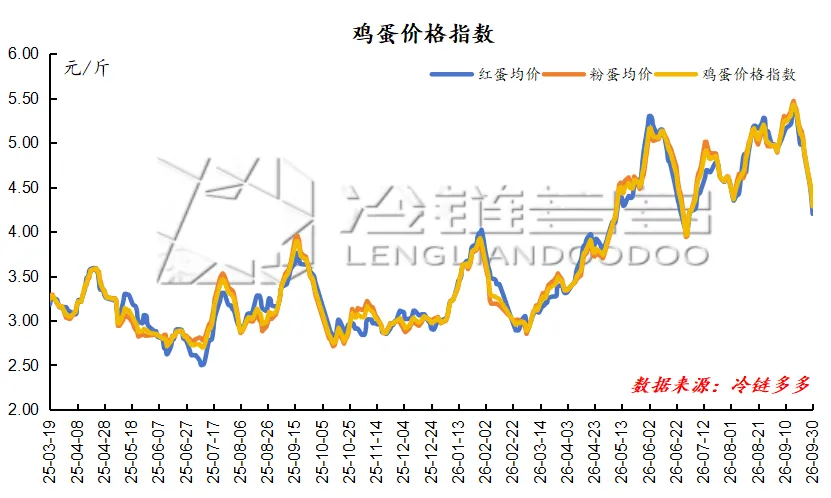
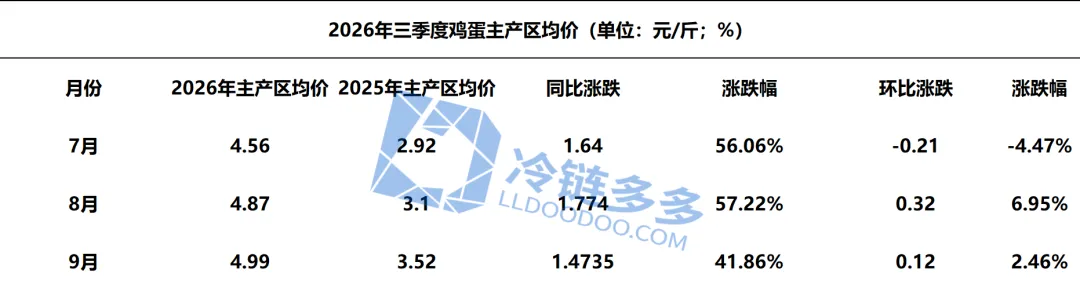
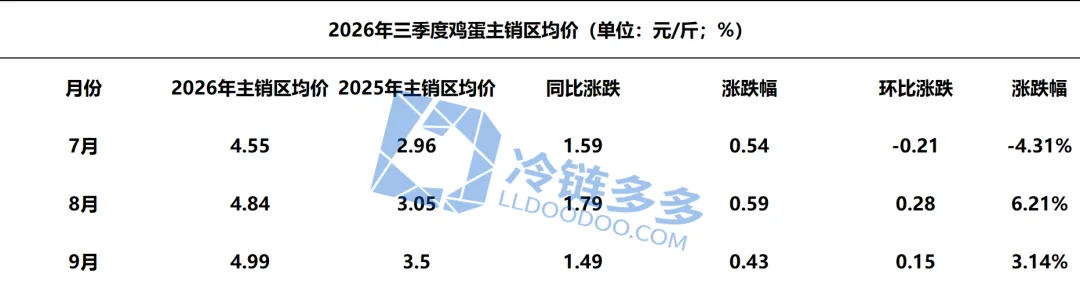
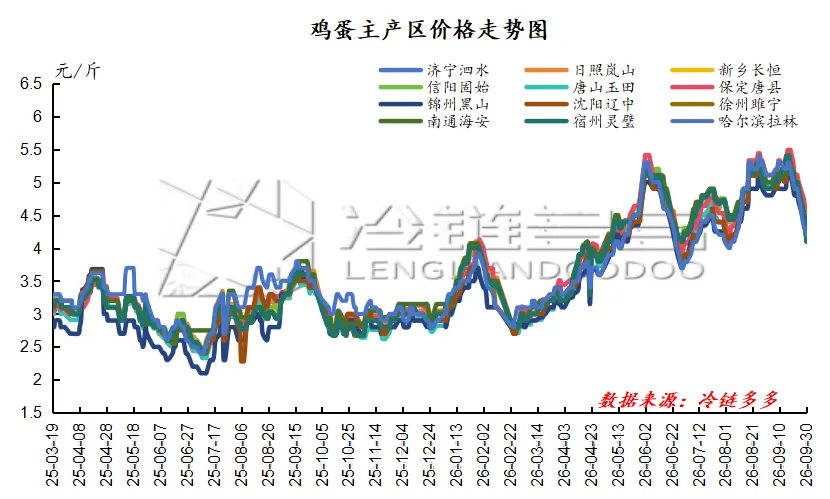
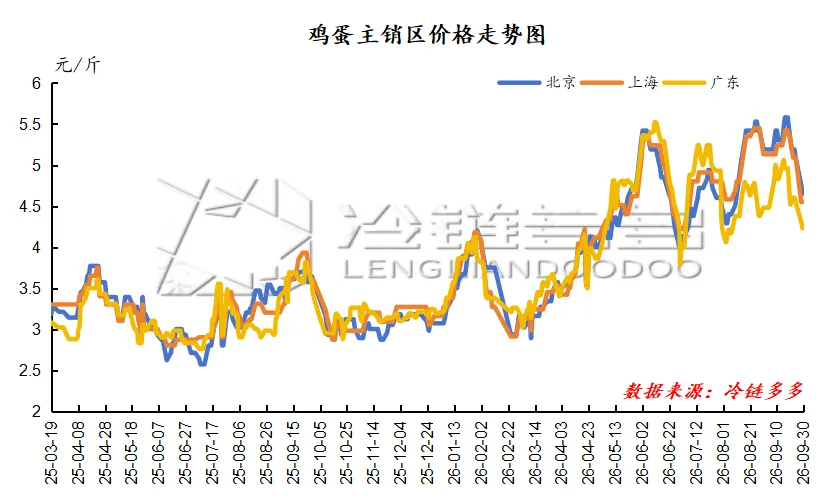
The egg market in the third quarter of 2026 exhibited a pattern of "rising first, then falling, with an elevated center of gravity." In July, egg prices surged rapidly before retreating sharply, though the overall price center shifted upward compared to the previous month. In early July, restocking demand warmed significantly under extreme weather disruptions, production area inventories dropped to low levels, and strong fundamentals supported a smooth transition to rising prices. By mid-month, the rebound height was limited, as the Guangdong sales region led the decline, dragging down both pink-shell and brown-shell egg production areas. Market sentiment weakened and inventories began to build. By month-end, the market remained weak, with food factory stockpiling delayed and no substantive positive catalysts. Egg prices retreated noticeably under the Mid-Autumn Festival procurement atmosphere.
In August, egg prices maintained a rapid upward trend with the price center continuing to rise. On the supply side, high temperatures eased, the tightening trend in laying rates improved, and new capacity continued to be released in the latter part of the month. On the demand side, the approaching Mid-Autumn Festival combined with back-to-school stockpiling boosted procurement sentiment across all channels, with smooth market transactions supporting steady price increases.
In September, egg prices rose first then fell, reaching the year's peak in mid-month. In early September, prices maintained their upward trend, primarily driven by domestic consumption and Mid-Autumn holiday stimulus, with low inventory levels across production areas supporting another rebound. However, by late September, the trend reversed as trading volumes in sales regions decreased significantly ahead of the Mid-Autumn Festival. Traders proactively managed risk by reducing procurement volumes and sharply lowering purchase quotes. Production area shipments slowed, inventories built up, and pink-shell egg production areas saw larger declines, dragging down brown-shell egg quotes as well.
2. Market Outlook
Supply Outlook
From the supply side, total layer flock inventory in major production areas is currently at normal levels, with newly opening production offsetting increased culling, keeping total inventory largely unchanged. As temperatures decline, laying rates are gradually recovering and egg weight gain is accelerating, partially offsetting the supply reduction from flock decline. On the culling side, farming operations are highly motivated to cull old hens, with concentrated culling occurring in early-to-mid September, temporarily accelerating capacity reduction. Replacement pullets are successively entering the laying period, and the age structure of the layer flock is relatively balanced. The rate of decline in overall inventory is narrowing, and supply volume is expected to remain roughly stable going forward. However, it should be noted that chicks restocked in the second quarter are successively entering the laying period, and supply increments will gradually materialize in the mid-to-late fourth quarter, with capacity pressure potentially rising slowly.
Demand Outlook
From the demand side, Mid-Autumn Festival stockpiling has completely wound down, raw material procurement by food processing has contracted noticeably, and downstream distribution channels are primarily digesting prior inventory with low restocking willingness. Approaching the National Day holiday, supermarkets and farmers' markets may see modest pre-holiday restocking, and catering and tourism consumption are expected to increase somewhat, providing periodic support for demand, though overall support remains limited. From mid-to-late October onward, without holiday-driven factors, the egg market enters the consumption off-season, with sales expected to gradually decline and demand-side support for egg prices further weakening. For November-December, while New Year's and pre-Spring Festival stockpiling expectations exist, their start timing is relatively late, and the fourth quarter demand side is unlikely to show strong performance overall.
Overall Outlook
Overall, as holiday consumption fades and demand enters the seasonal off-season, chicks restocked in the second quarter are successively entering the laying period, and supply increments are gradually materializing. The supply-demand relationship will further loosen, and egg prices face trend-based downward pressure. The core variable remains the pace of old hen culling. If culling continues to accelerate, it may partially alleviate supply pressure and slow the pace of price decline. It is expected that fourth-quarter egg price adjustments will be approximately RMB 0.80-1.20/jin (0.5 kg), with the average price in major production areas potentially falling to the RMB 3.20-3.80/jin range. The overall pattern is characterized by "stable first, then weak, with a downward shifting center of gravity."
-
Q3 2026 Egg Market Quarterly Report(Sep 30)9563
-
Honduras Targets 100+ Shrimp Containers for China(Sep 30)8773
-
Salmonella Detected in Romanian Export of Frozen Chicken Legs(Sep 30)6876
-
Egg Monthly: Peak Season Recedes, Egg Prices Enter "Off-Season Mode"!(Sep 29)6143
-
Zero Tariffs: African Fruits to China(Sep 29)8033