
Global Crab Trade Continues to Shift Toward Asian Markets(Sep 23)
Global Crab Trade Continues to Shift Toward Asian Markets
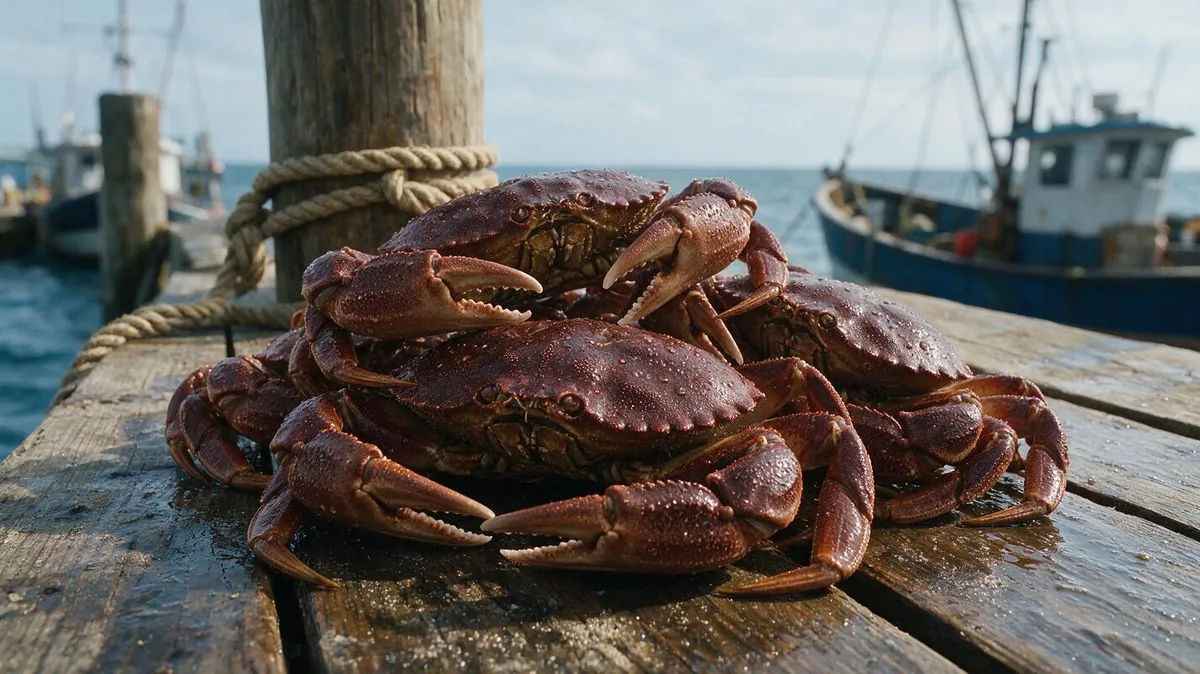
On May 27, 2026, the UN Food and Agriculture Organization (FAO) GLOBEFISH released a global crab trade analysis noting that in 2025, global crab trade was affected by changes in market access, tariffs, and logistics. Supply increases from major producing regions such as Russia, Canada, Norway, and Alaska did not lead to significant price declines, while the United States and China continued to absorb large volumes of market supply.
Global crab imports in 2025 totaled approximately 448,200 tons, a decrease of 13,000 tons year-on-year. Japan's import volume declined by approximately 20%, making it a significant factor in the global import reduction. U.S. imports reached approximately 113,000 tons, up 7% year-on-year, with Canada remaining the primary supplier.
China has become the world's largest crab import market. In 2025, China imported approximately 134,000 tons of crabs, essentially flat compared to 2024. Russia is China's most important overseas supplier, accounting for 34% of China's crab imports, followed by Vietnam and Indonesia.
The shift in Russian crab trade flows has become more pronounced. In 2025, Russia's crab export volume was approximately 87,700 tons, with China accounting for 51%, South Korea 23%, and Japan 18%. After the U.S. market closed, Russian crab supply increasingly flowed to Asia, raising Asia's share in Russian crab trade.
Entering 2026, this trend continues. Market information as of September 2 shows that Russian crab companies are directing more supply to Middle Eastern and East Asian markets to fill the sales gap left by restricted access to U.S. and EU markets. Russia's annual crab catch is approximately 95,000 tons, of which 75% to 80% is exported, with Asian markets having become the primary export destination.
China and South Korea occupy important positions in this trade pattern. After Russian crabs enter Asia, they include both frozen products and live and chilled products. For live products, the geographic distance between Russian Far East production areas and northeastern China and South Korea is relatively short, allowing road, sea, and air logistics to form different transport combinations.
Another change in the global crab market comes from supply and pricing. FAO believes that global crab trade volume is expected to remain relatively stable in 2026, but trade value may increase. Delayed Canadian snow crab supply, tight Tanner crab supply, reduced Norwegian king crab quotas, and rising fuel costs may all support prices.
The Asianization of Russian supply does not mean that European and American market demand has disappeared; rather, trade routes have been reconfigured after changes in market access conditions. FAO data shows that the U.S. still imported approximately 113,000 tons of crabs in 2025, up 7% year-on-year, while China's import volume remained at approximately 134,000 tons. Changes in different markets' imports have led to a redistribution of global crab supply across regions.
From Russia's export structure, the Asian market has taken on a larger share of cargo flows. China, South Korea, and Japan collectively account for over 90% of Russia's 2025 crab export volume, with China alone accounting for more than half. In 2026, Russian crab companies continue to seek Middle Eastern and East Asian buyers, and market flow adjustments are still ongoing.
The main variables in global crab trade currently include Russia's export pace to Asian markets, Canadian snow crab arrivals, Norwegian king crab quotas, and U.S. and European import policies. Actual supply volumes in the fourth quarter of 2026 will continue to depend on these specific factors.
-
Vietnam Dragon Fruit Prices Plunge Ahead of Mid-Autumn Festival(Sep 23)9394
-
Global Crab Trade Continues to Shift Toward Asian Markets(Sep 23)7948
-
Eggs: "High-Dive Plunge", Losing the 5-Yuan Threshold(Sep 22)8131
-
Vietnamese Basa Fish Enters Over 550 Japanese Sushi Restaurants(Sep 22)8206
-
Russian Wild Salmon Catch Nears Season End at Record Low(Sep 22)6155