
Egg Weekly: A Week of Soaring Prices! The Rise Is Unstoppable!
Domestic Egg Market Analysis
1.1 Egg Market Price Analysis
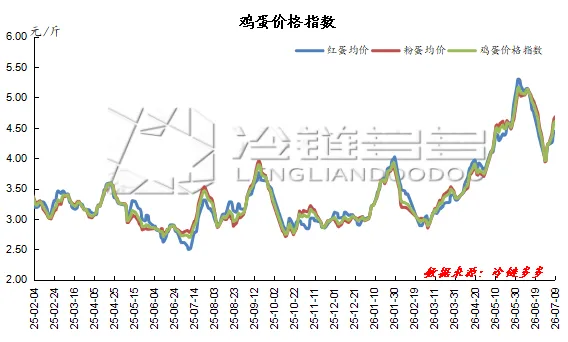
This week, the egg market exhibited a strong performance despite the off-season, driven by multiple factors, resulting in a significant price increase. As of Thursday, the average price of red eggs was 4.43 yuan/jin, and the average price of pink eggs was 4.68 yuan/jin, a price difference of 0.25 yuan/jin, an increase of 0.32 yuan/jin compared to last Thursday. The core driver of this week's rebound was a shift in market sentiment and the activation of restocking demand.
On the one hand, food processing enterprises and cold storage traders began to stock up in advance for the peak demand season in the third quarter, increasing their willingness to buy at the bottom and build up inventory, thus accelerating market sales.
On the other hand, after inventories in production and distribution continued to decline to recent lows, supply pressure was effectively alleviated, and traders generally realized that spot prices may have reached a temporary low point before the Mid-Autumn Festival. At the same time, high temperatures effectively offset new production capacity, providing bottom support for prices on the supply side.

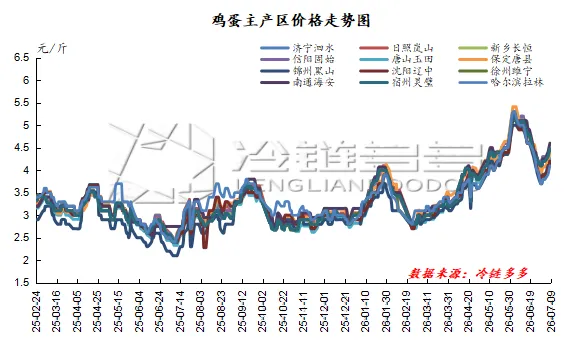
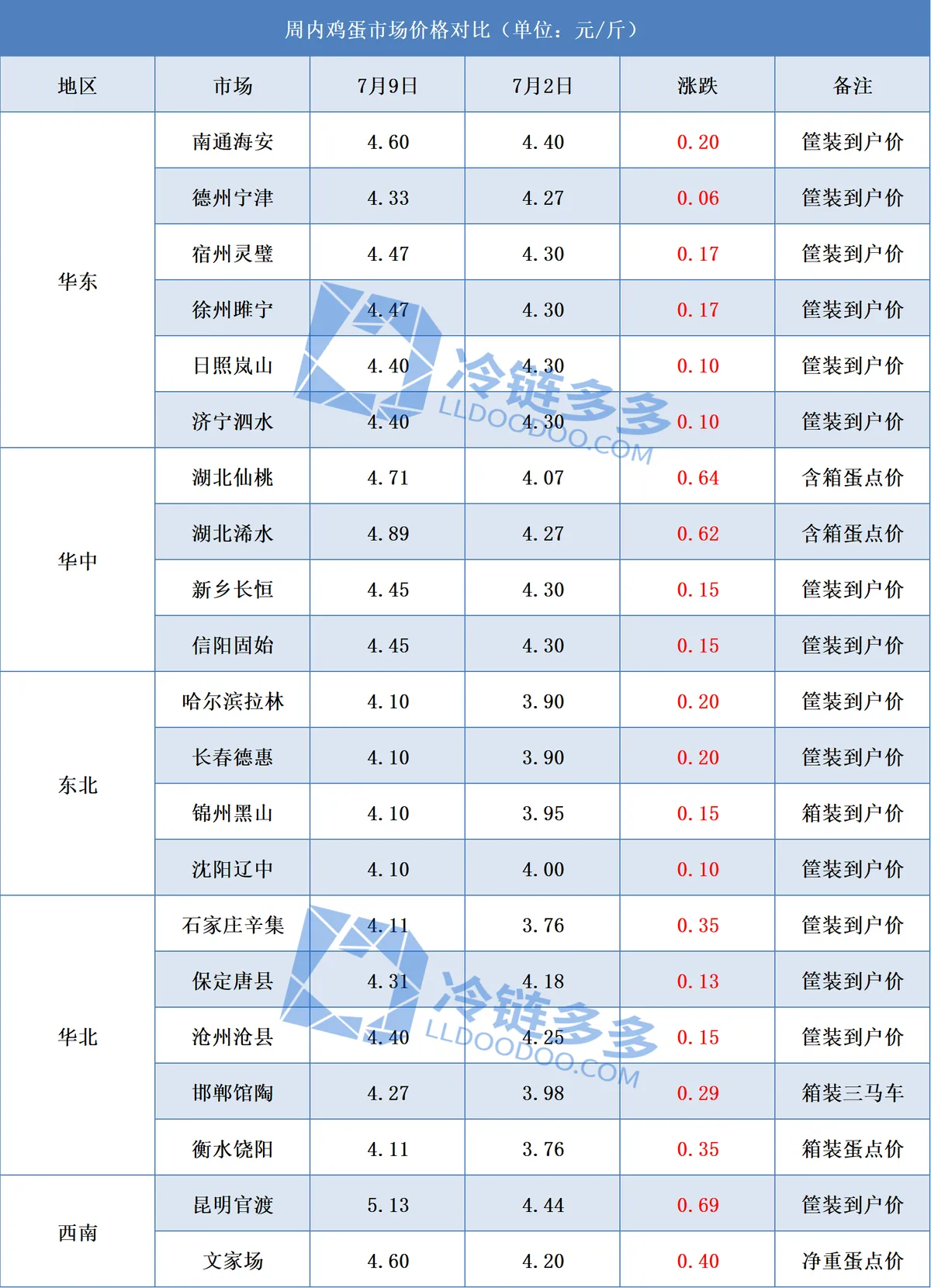
Production Area Market: On Thursday, the average price of eggs in major production areas was 4.46 yuan/jin, an increase of 0.23 yuan/jin compared to last Thursday.
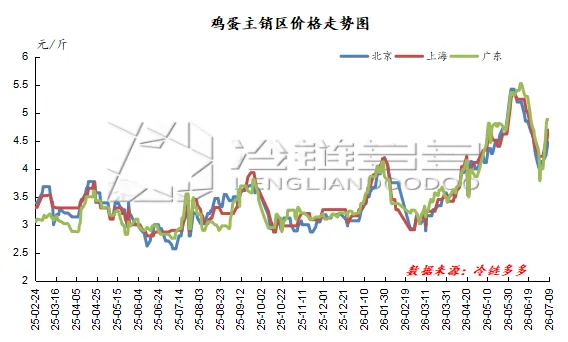
Sales Market: On Thursday, the average price of eggs in major sales areas was 4.52 yuan/jin, an increase of 0.18 yuan/jin compared to last Thursday.
1.2 Egg Market Price Trend Chart
1.3 Comparison of Domestic Egg Regional Market Prices This Week
Analysis of Laying Hen Inventory and Slaughter
2.1 Inventory Analysis
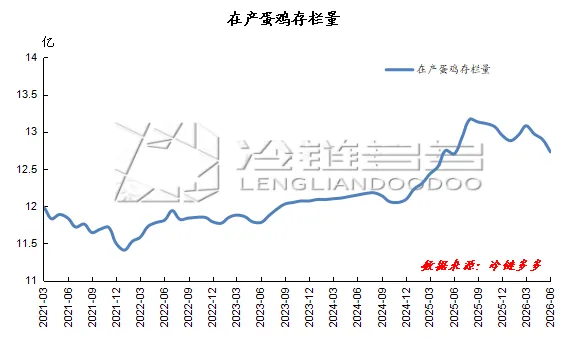
This week, the egg market inventory presented a complex situation of tightening effective supply despite changes in total inventory. The core contradiction in the market lies in the insufficient effective supply caused by the imbalance in the inventory structure. On the one hand, the low restocking in the second half of 2025 led to a decrease in the proportion of laying hens during the current peak laying period, while the proportion of newly laying hens and older, low-producing hens was relatively high. On the other hand, the high temperature weather caused a decline in egg production, and the actual egg production was lower than the theoretical value corresponding to the inventory. Therefore, although the total inventory did not decrease significantly, the actual supply of commercial eggs in the market remained tight.
2.2 Slaughter Analysis
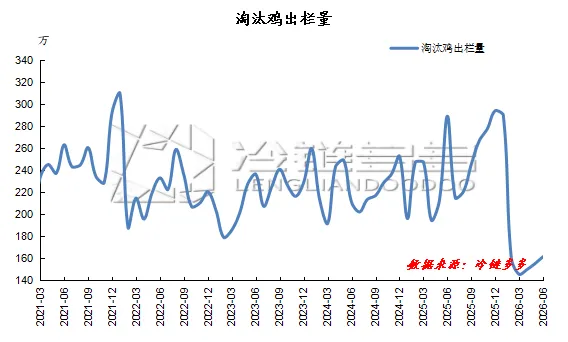
This week, the egg market slaughter volume was low. Driven by high egg prices, substantial profits for poultry farmers, and widespread bullish expectations for the Mid-Autumn Festival, farmers are extremely reluctant to cull their hens. Although some older, low-efficiency hens were cleared out during the June price correction, the market's bullish sentiment reignited in July as spot prices rebounded, perpetuating and strengthening the reluctance to cull.
Egg Demand Analysis
This week, the egg market demand exhibited a mixed pattern: weak end-user demand, stockpiling activity, and rising expectations. Actual end-user consumption remains in the traditional off-season, with high temperatures and humidity coupled with summer vacation for schools nationwide resulting in a complete absence of demand for group meals. However, the initiative in market demand has quietly shifted from end-user consumption to stockpiling in the intermediate links.
The market generally believes that spot prices have reached a pre-Mid-Autumn Festival low, and the willingness to buy on dips and build up inventory has significantly increased. Furthermore, market expectations for demand recovery after the end of the plum rain season in southern China in mid-July, and the peak season for the start of the school year and Mid-Autumn Festival stockpiling in August continue to rise, further reinforcing bullish sentiment.
Egg Market Forecast
From the supply side, effective supply remains tight in the short term. High temperatures have further weakened actual production capacity, while farmers are reluctant to cull their hens, resulting in extremely low culling rates. Even with a steady increase in newly laying hens, there has been no concentrated release of supply.
From the demand side, short-term end-consumer demand remains in the off-season. The plum rain season in the south and the summer catering shortage are suppressing actual sales. However, restocking demand in the intermediate links has already started. Food processing companies and cold storage traders are more willing to buy at low prices due to low inventory levels, becoming an important support for current egg prices.
In summary, the egg market is expected to remain stable next week, with red and pink eggs showing different performance. The adjustment range is expected to be around 0.15 yuan/jin, with the average price in major producing areas at 4.35-4.5 yuan/jin.
-
Brazil Pork Exports Grow 6.2% in Jan-Sep; China-Brazil Protocol Revision Opens New Opportunities(Oct 10)6296
-
China Procurement Surge Tightens Global Cold Water Shrimp Supply(Oct 10)6872
-
Eggs: Off-Season Pressure — Egg Prices Still Need to "Hold Out"(Oct 9)6963
-
Peru Avocado Production Forecast Revised Down: China Shipments Expected at 44,000 Tons(Oct 9)9835
-
Brazil September Chicken Exports Rise: EU and China Demand Rebounds(Oct 9)8440