
Peru Avocado Production Forecast Revised Down: China Shipments Expected at 44,000 Tons(Oct 9)
Peru Avocado Production Forecast Revised Down: China Shipments Expected at 44,000 Tons
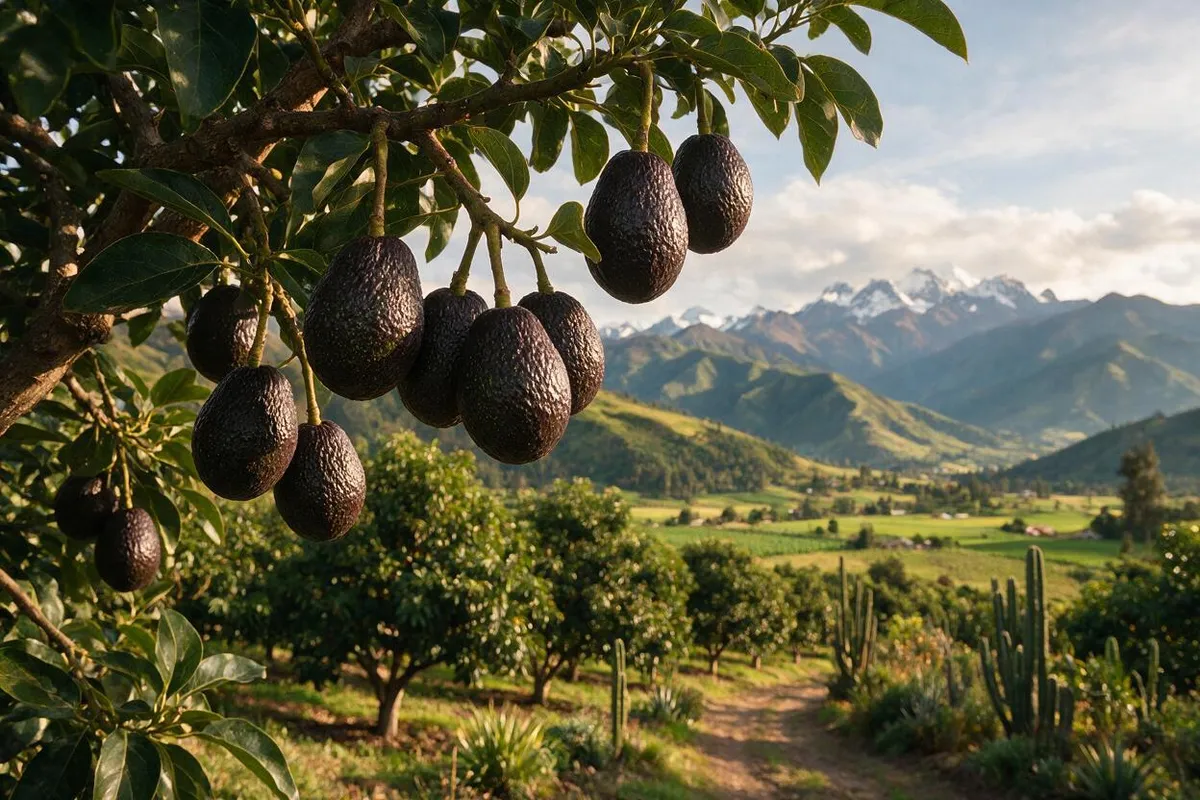
El Nino Impact Forces Forecast Reduction
The Peruvian Hass Avocado Producers and Exporters Association (ProHass) forecasts that, due to the impact of the El Nino phenomenon, 2026 avocado export volume will reach approximately 710,679 tons, a 2% decrease from the previous year's 722,754 tons. The initial forecast at the start of the season was 722,754 tons, representing a 6% year-on-year increase. When El Nino also occurred in 2024, Peru exported 523,035 tons of Hass avocados, down 10% from 578,465 tons in 2023.
Dry Matter Content Challenges
The reason for the downward revision is the effect of the El Nino phenomenon. Rising temperatures have resulted in better dry matter content in smaller-sized avocados compared to larger ones, meaning that small-sized avocados dominate early-season shipments.
Association General Manager Arturo Medina Castro stated: "At the start of the season, large avocados had not yet reached the required dry matter content of 22%, and responsible growers would not harvest them. We also found significant variation in dry matter content within the same batch. Many growers only realized this issue after the fruit had already entered the market, and importers filed complaints. As a result, they had to wait 3 to 4 weeks for all fruit in the same batch to reach the required dry matter content."
Market Distribution and Asian Demand
Of the projected total export volume of 710,679 tons, Europe will account for 67% (up from 63% in 2025), followed by Chile at 10% (up from 9%), the United States at 9% (down from 10%), China at 6% (unchanged), Japan at 3% (unchanged), and other markets at 5%.
For the Asian market, association data indicates that 80,193 tons of avocados will be shipped this year, up 6% from 75,365 tons in 2025. The primary destinations include China at 43,822 tons (down 2% from 44,576 tons in 2025), accounting for 55% of the Asian total; Japan at 21,760 tons (up 6% from 20,496 tons), representing 27%; South Korea at 13,006 tons (up 41% from 9,202 tons), representing 16%; Thailand at 671 tons (up 76% from 381 tons), representing 1%; and other markets at 933 tons (up 31% from 710 tons), representing 1%.
Broader Context of El Nino Impact on Peruvian Agriculture
The El Nino phenomenon is affecting Peruvian agriculture more broadly. According to reports, the current El Nino event is expected to persist through fall 2027, ranking among the five most severe in a century. High temperatures and heavy rainfall have severely disrupted crop quality and growth cycles, with mango flowering rates dropping from 50% to below 15%, blueberry production declining by over 50% in some areas, and avocado and citrus also facing quality and yield challenges. Peruvian agricultural export associations have revised this year's export expectations downward, with northern coastal exports projected to decline 15-20%.
-
Peru Avocado Production Forecast Revised Down: China Shipments Expected at 44,000 Tons(Oct 9)9800
-
Brazil September Chicken Exports Rise: EU and China Demand Rebounds(Oct 9)8417
-
Egg Prices Fall Back to the "RMB 4 Era" — Will They Drop Further?(Oct 8)8332
-
US Senator Introduces Bill to Raise Ecuadorian Shrimp Tariffs to 40% by 2029(Oct 8)5195
-
China Approves Four New Brazilian Meat Processing Plants for Export(Oct 8)5787