
Egg Weekly: High-level correction? The tug-of-war intensifies!
Domestic Egg Market Analysis
1.1 Egg Market Price Analysis
This week, the domestic egg market saw a rise followed by a fall, with prices slightly increasing. As of Thursday, the average price of red eggs was 4.73 yuan/jin, and the average price of pink eggs was 4.7 yuan/jin, a price difference of 0.03 yuan/jin, an increase of 0.065 yuan/jin compared to last Thursday. The prices of red and pink eggs showed mixed performance.
Due to persistently high temperatures and low egg production rates, red egg prices rose slightly, while pink egg prices declined. Demand was weak, with downstream buyers showing low enthusiasm for purchasing, leading to a weakening egg price and a slightly weaker trading atmosphere. Downstream buyers remained resistant to high prices, and inventories at all levels increased slightly. The market was characterized by a wait-and-see attitude, with low inventory levels still supporting the market, limiting the room for further price adjustments.

Production Area Market: On Thursday, the average price of eggs in major production areas was 4.73 yuan/jin, an increase of 0.03 yuan/jin compared to last Thursday.
Sales Market: On Thursday, the average price of eggs in major sales areas was 4.7 yuan/jin, an increase of 0.03 yuan/jin compared to last Thursday.
1.2 Egg Market Price Trend Chart
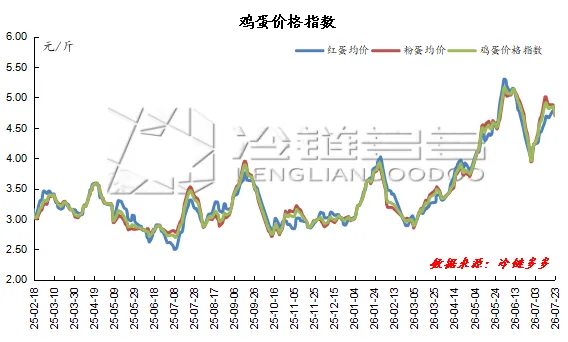
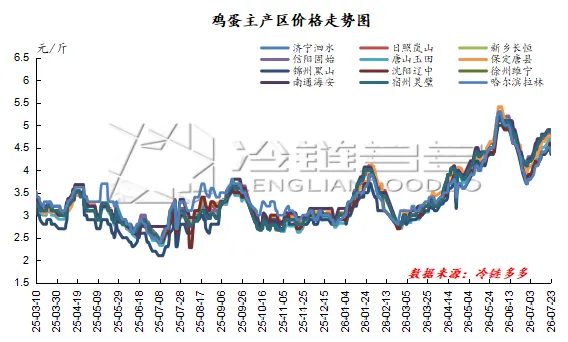
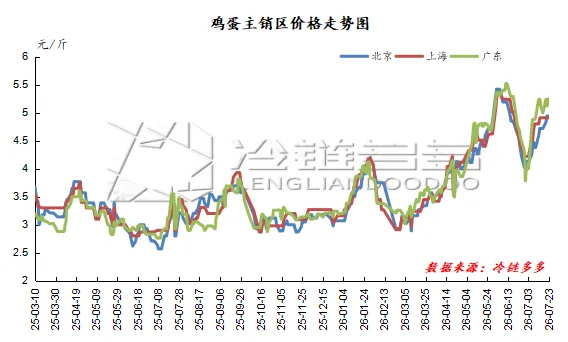
1.3 Comparison of Domestic Egg Regional Market Prices This Week
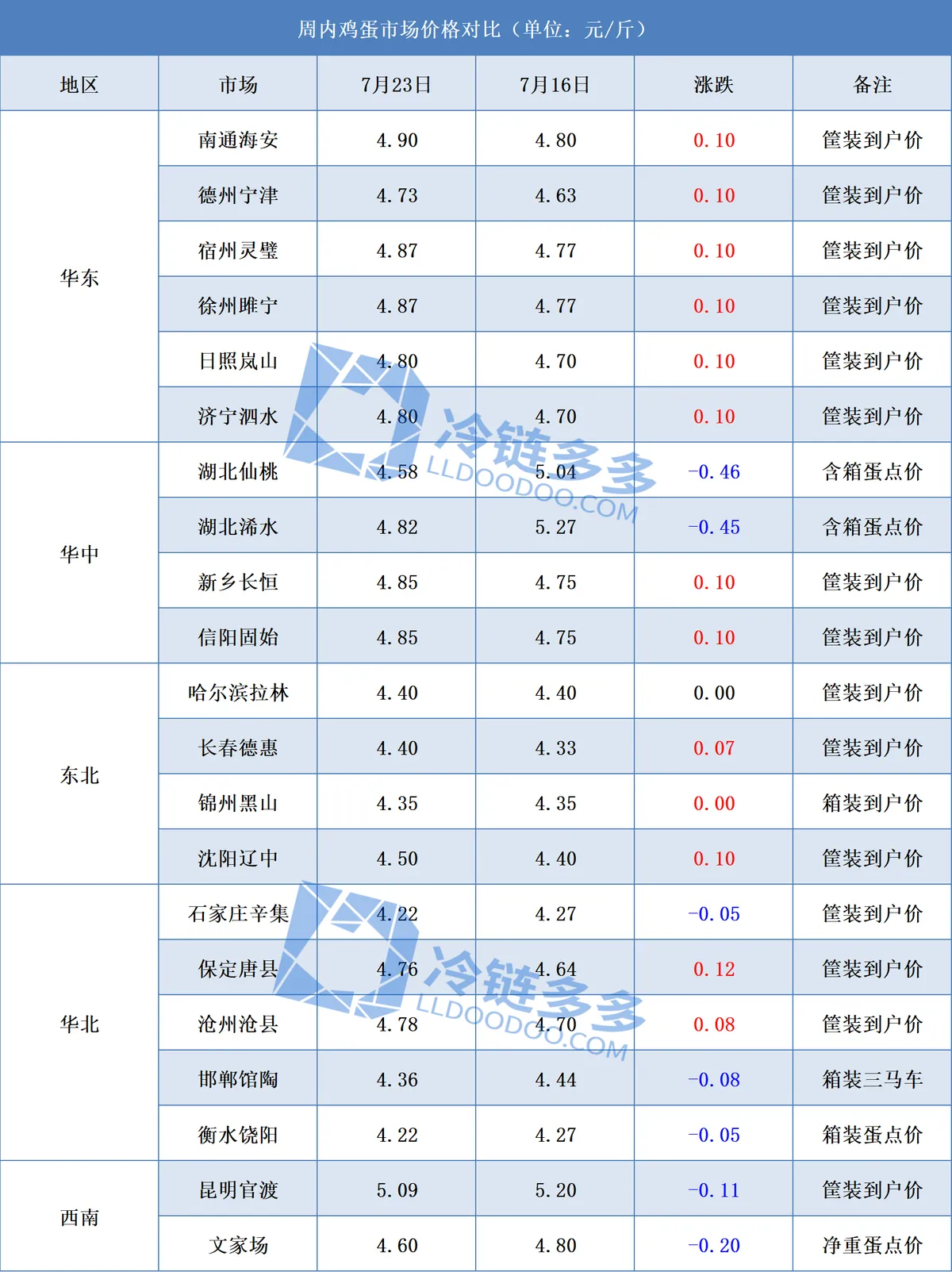
Analysis of Laying Hen Inventory and Slaughter
2.1 Inventory Analysis
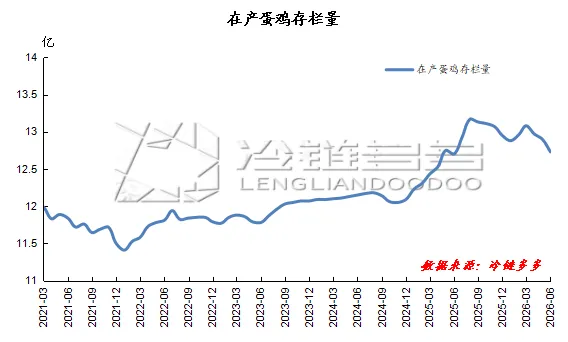
This week, the egg inventory continued to decline slightly compared to the previous week, with the overall inventory at a low level for the year. Chicks added in March have gradually started laying, leading to a slight recovery in restocking enthusiasm and increased chick sales. However, the new capacity is insufficient to offset the capacity reduction.
The previous surge and subsequent decline in egg prices dampened market confidence, coupled with the continued high temperatures, resulting in low egg production rates. Farmers accelerated the culling of inefficient older hens, and multiple factors combined to drive a continued decline in the laying hen inventory, resulting in weak short-term effective supply support for eggs.
2.2 Slaughter Analysis
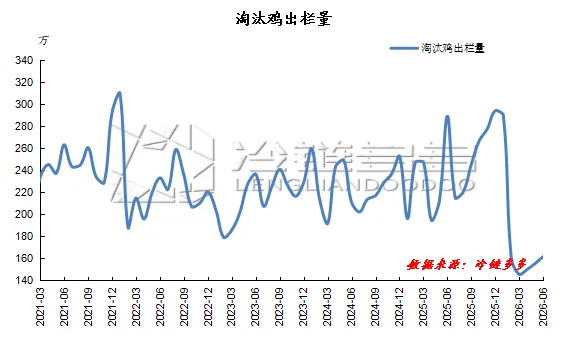
This week, the culling volume of hens remained low. The previous surge and subsequent decline in egg prices dampened short-term market confidence, coupled with the continued high temperatures restricting egg storage, resulting in persistently low inventory levels at all stages. The market is generally optimistic about the Mid-Autumn Festival peak season, with farmers significantly delaying the culling of older hens and exhibiting a strong reluctance to cull. Currently, the increase in newly laying hens offsets the delayed culling of older hens, slowing the pace of capacity reduction and further reinforcing expectations of a tight supply in the short term.
Egg Demand Analysis
This week, egg demand is expected to weaken, with sluggish retail sales and no concentrated stockpiling. Continued high temperatures exacerbate egg storage losses, leading downstream merchants to be cautious in their purchases. Coupled with the summer school catering procurement lull and the fact that Mid-Autumn Festival food processing preparations have not yet started, the market lacks incremental demand support, with most purchases based on sales. Weak demand has led to a slight increase in inventory in production and distribution, and the overall market is gradually weakening.
Egg Market Outlook
From the supply side, the current newly laying hens are all chicks replenished during the spring, and the new production capacity continues to be released steadily. The overall industry supply is becoming more relaxed, with the supply of small-sized eggs continuing to increase, and inventory at all stages gradually growing. Short-term supply pressure is increasing, and the pressure on the supply side is significantly intensifying.
From the demand side, the high temperatures continue to suppress market consumption, coupled with the current weakening egg prices, resulting in continued insufficient purchasing intentions at the terminal level. The overall market is expected to weaken further, and with the traditional peak season yet to arrive, consumption has declined significantly year-on-year. Therefore, the market lacks sufficient support in the later stages and is expected to continue its weak trend.
In summary, the egg market is expected to continue its weak downward trend next week, with the supply-demand imbalance becoming more pronounced. The performance of red and pink eggs will still differ, with adjustments around 0.15 yuan/jin, and the average price in major producing areas at 4.6-4.7 yuan/jin.
-
Peru Avocado Production Forecast Revised Down: China Shipments Expected at 44,000 Tons(Oct 9)9806
-
Brazil September Chicken Exports Rise: EU and China Demand Rebounds(Oct 9)8423
-
Egg Prices Fall Back to the "RMB 4 Era" — Will They Drop Further?(Oct 8)8336
-
US Senator Introduces Bill to Raise Ecuadorian Shrimp Tariffs to 40% by 2029(Oct 8)5197
-
China Approves Four New Brazilian Meat Processing Plants for Export(Oct 8)5790