
Ecuador Shrimp Industry Hit by Power Outage Crisis: One Week Without Electricity, Christmas Exports at Risk(Oct 19)
Ecuador Shrimp Industry Hit by Power Outage Crisis: One Week Without Electricity, Christmas Exports at Risk
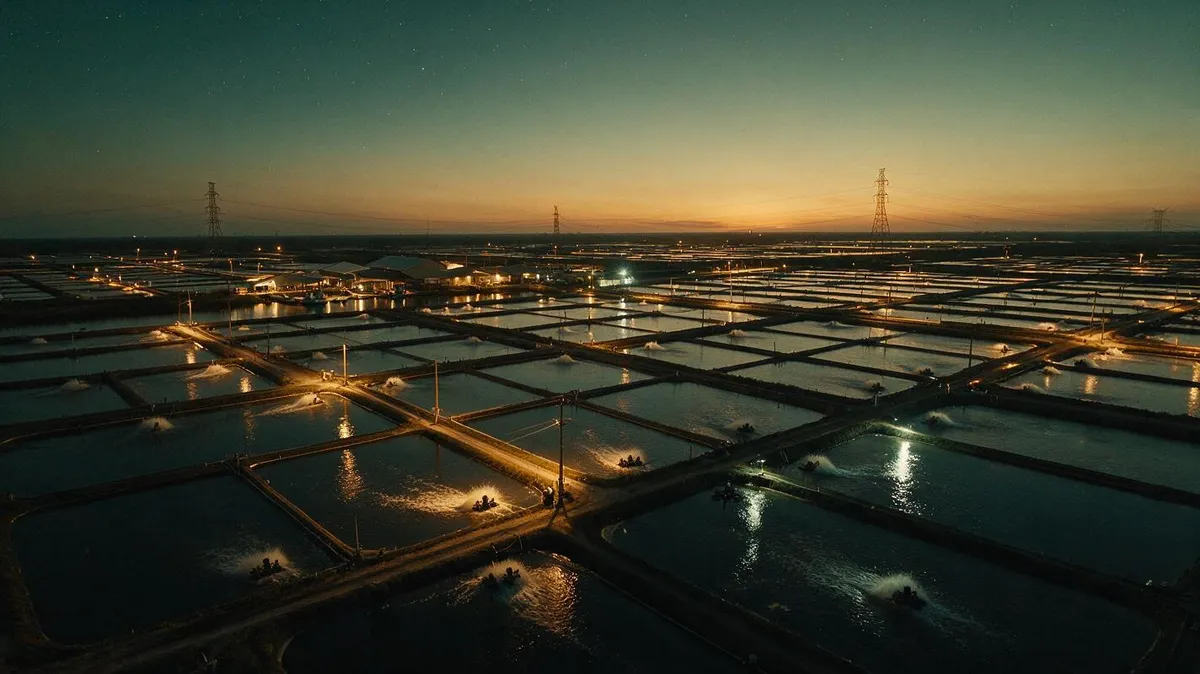
Ecuador's shrimp aquaculture industry chain is facing an electricity crisis. The National Aquaculture Chamber (CNA) issued a statement on October 14, declaring that deepening power rationing has pushed the entire industry chain into a "critical situation." The latest measure targets medium-voltage users: power was cut from October 14, with restoration not expected until 6:00 a.m. on October 21. Enterprises without backup generators have been unable to draw power from the public grid for nearly a week, effectively bringing operations to a complete halt.
Shrimp aquaculture involves living organisms, requiring uninterrupted power supply 24 hours a day, 7 days a week, from hatching, water pumping, and aeration to export cold chain logistics. CNA President Jose Antonio Camposano stated: "Water pumping and aeration cannot be paused, nor can they be compensated by extending working hours on another day. Once interruptions exceed backup capacity, months of effort could be lost within hours."
The power rationing has escalated rapidly. It began with the largest industrial users on September 22, then on October 2, over 9,000 enterprises were notified of 48-hour power cuts. From October 12, high-voltage Zone 1 and medium-voltage industrial areas were extended to 72 hours per week, and on October 14, medium-voltage users faced a continuous week-long suspension. Energy Minister Juan Carlos Blum stated that the authorities' priority is to ensure residential electricity supply, shifting the burden to the industrial sector. Drought compounded by El Nino has pushed hydropower to the brink. On October 8 at 4:00 p.m., the Mazar reservoir water level had dropped to an elevation of 2,129.07 meters. According to CNA statistics, the power rationing window expanded from 24 hours per week to 48 hours and then to 72 hours within a few weeks. Ecuador has experienced this before: during the energy crisis triggered by drought in 2024, CNA estimated that the shrimp industry could lose up to $5 million per day.
Power outages directly push up costs. Diesel is essential for backup equipment operation, but obtaining diesel has become practically difficult. Electricity prices are about to rise, and fuel prices are higher than during previous crisis periods. CNA pointed out that actual power restoration can be delayed up to 4 hours beyond announced times, disrupting fuel reserve planning and disturbing harvesting, processing, and transportation. Costs for key inputs such as packaging, ice, lubricants, and spare parts have risen accordingly, and industry suppliers have been affected simultaneously. CNA believes these cumulative effects are eroding the competitiveness of Ecuadorian shrimp.
This crisis comes at a time of peak shrimp exports for Ecuador. Ecuador is the world's largest shrimp exporter, with near-450,000 tons exported in the second quarter of this year, a 14% year-on-year increase, and annual export volume is expected to reach 1.6 million tons. China accounted for approximately 51.5% of first-half export volume and remains the top destination, while the U.S. market is accelerating. From January to April, U.S. imports reached 249.1 million pounds, up 30.7% year-on-year. The current period is precisely the window for international markets to stock up for Christmas and New Year. CNA warns that uncertainty in product transportation capacity is putting exports at risk, and regaining the commercial confidence of these customers may take longer than restoring power supply.
CNA has requested authorities to clarify the true scope of power rationing, ensure fuel supply, and accelerate the process of connecting private power generation enterprises to the grid. The organization stated that protecting production means protecting the jobs that depend on it, and the country needs to "make immediate decisions" to avoid jeopardizing decades of accumulated employment and markets. Mitigation prospects are also on the agenda. A transmission line to Peru is planned to begin operation in November, which would allow Ecuador to import electricity during the dry season.
-
Kazakhstan's Beef, Mutton, and Horse Meat Production Increases(Oct 19)8961
-
Ecuador Shrimp Industry Hit by Power Outage Crisis: One Week Without Electricity, Christmas Exports at Risk(Oct 19)8554
-
Eggs: Egg Prices Sideways, Local Markets Stirring(Oct 16)7504
-
Peru Cancels Second Anchovy Fishing Season, Global Fishmeal Supply Hits Decade Low(Oct 16)9446
-
Ecuador-Exported Organic Bananas Found with Pesticide Residue Exceedance(Oct 16)7465